Written by Dr. Marcus Chen, DVM | August 27, 2026
Summer is ending. Winter is coming. Fall is what happens in between and it's more demanding on dog paws than most owners realize.
In my Minneapolis practice, fall brings a specific pattern of paw problems: dogs who did fine all summer suddenly develop issues in September and October. Owners are confused. Why now? The weather isn't extreme. There's no obvious cause.
The answer is that fall is uniquely stressful for dog paws. It's not the cold of winter or the heat of summer, it's the transition itself. And the transition creates conditions that neither summer nor winter care protocols address adequately.
Here's what actually happens:
- Summer-damaged pads finally show their accumulated stress
- Temperature swings create dry-then-moist-then-dry cycles that damage tissue
- Wet leaves and mud soften pads for repeated cycles
- Early cold exposure catches unprepared skin
- Seasonal allergies flare with different triggers than summer allergies
- Hyperkeratosis often worsens as weather changes
- Chemical exposure patterns shift (from lawn chemicals to early ice melt)
Most owners don't adjust their paw care until winter forces them to. By then, they're playing catch-up on problems that could have been prevented with fall-specific care.
This guide walks you through what actually changes in autumn, why it matters, and how to prepare your dog's paws for the harder months ahead, starting now, before winter arrives.
Why Fall Is Different (And Why It Matters)
Fall doesn't feel like a paw care emergency. The weather is often pleasant. There aren't obvious dangers like hot pavement or ice. Owners understandably assume the "hard part" is behind them.
This is the fall paw care mistake.
Fall creates a compound stress pattern that summer and winter don't:
1. Cumulative summer damage becomes visible
Small injuries, chronic mild dehydration, and pad wear from summer often don't fully manifest until fall. Owners see peeling, cracking, or roughness appearing "suddenly" in September that was actually building up from July-August.
2. Temperature swings destabilize tissue
Fall can bring 80°F afternoons and 40°F mornings within the same week. This constant fluctuation stresses skin barrier function in ways that stable temperatures (even extreme ones) don't.
3. Moisture cycles damage keratin
Wet leaves, morning dew, damp trails, then dry indoor heating in evenings. Repeated wet-dry cycles are harder on pad tissue than sustained wetness or sustained dryness.
4. Skin barrier is unprepared for cold
Skin adapts gradually to temperature changes. Summer skin isn't ready for October cold. Winter skin isn't ready for September warmth. Fall catches skin between adaptations.
5. Immune shifts affect allergic dogs
Fall allergies (mold spores, weed pollens, dust mites returning indoors) affect many dogs differently than summer allergies. Dogs whose paws were fine all summer may develop allergic paw problems in October.
6. Chemical exposures shift
Lawn treatments continue into fall. Early ice melt appears in cold-climate regions. Halloween decorations. Autumn cleaning products for indoor spaces where pets have direct contact.
7. Activity patterns change
Some dogs get more active (comfortable hiking weather). Others get less active (early sunsets). Both extremes stress paws differently than summer patterns.
This compound stress means fall care needs to be proactive, not reactive.
What Changes: The 6 Key Fall Shifts
Let me walk through the specific changes to watch for and address.
Shift 1: Summer Damage Becomes Visible
In fall, I see many dogs whose paw problems started in July but weren't obvious until now.
Common patterns:
- Peeling from hot pavement burns that owners didn't notice
- Chronic dryness from months of low ambient moisture
- Micro-cracks from repeated wet-dry cycles
- Hyperkeratosis progression in predisposed breeds
- Nail damage from summer-hardened dry nails becoming brittle
- Between-toe irritation from prolonged summer allergen exposure
What to do:
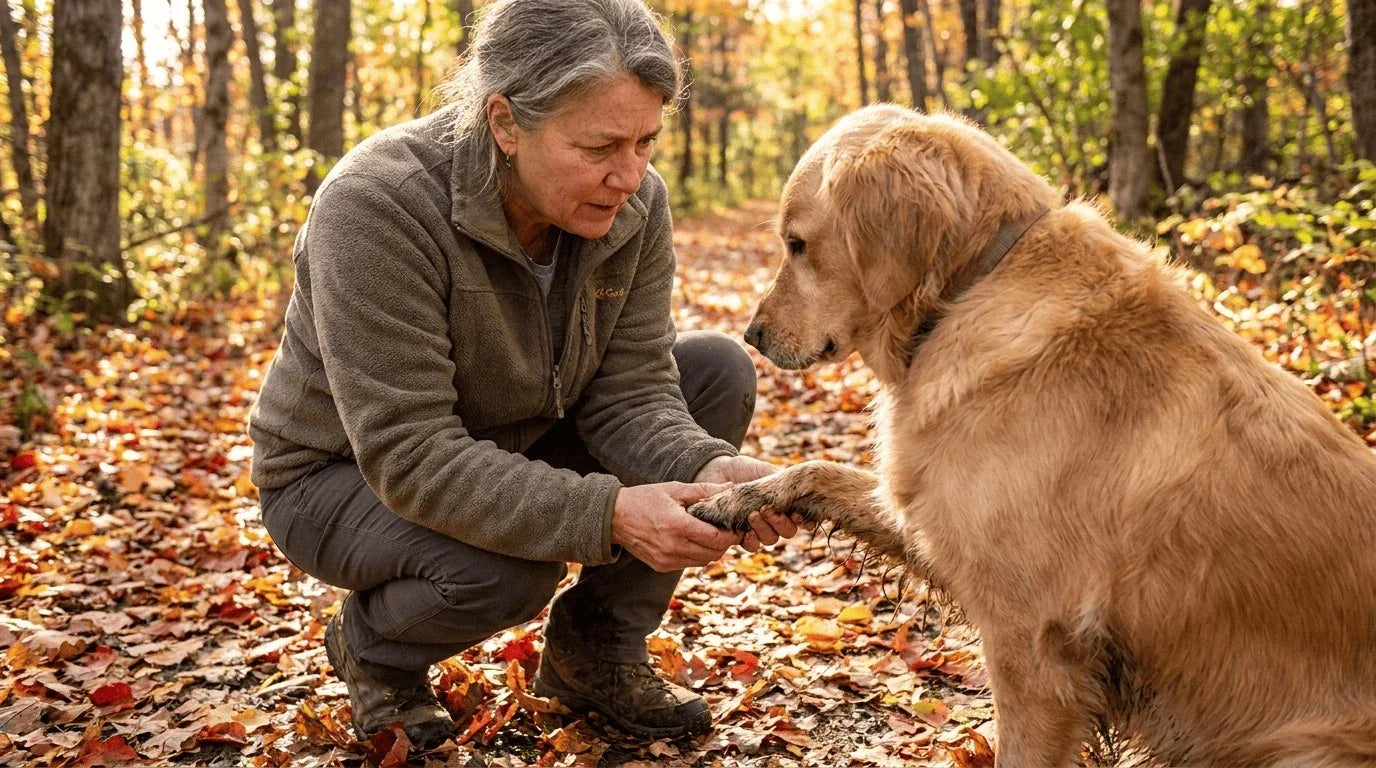
Fall assessment (do it now):
- Examine each paw pad carefully in good lighting
- Feel for softness (should be flexible, not rock-hard)
- Look for peeling, cracks, or roughness
- Check between toes for redness or discoloration
- Compare left and right for symmetry
If you find damage: Address it now with sea buckthorn-based healing balm before cold weather makes it worse. Winter cold intensifies any existing paw problem dramatically.
Related: The 5 causes of paw pad peeling and how to identify each
Shift 2: Temperature Swings Stress Skin Barrier
Warm days, cold nights, sudden weather changes—fall is meteorologically unstable.
Skin barrier function depends on consistent conditions. Temperature stability allows skin to maintain optimal moisture retention. Fall's swings force skin to adapt repeatedly, and adaptation costs barrier integrity.
What this means practically:
- Pads may look "dry" one day, "over-moist" the next
- Cracks develop more easily than in stable weather
- Redness or sensitivity fluctuates
- Healing takes longer than in summer
What to do:
Consistent daily balm application becomes more important, not less, in fall.
A pH-buffered formula with penetrating oils helps skin barrier stay functional through temperature swings. This is where sea buckthorn oil shows real value—it supports keratin regulation regardless of environmental stress.
Don't skip days. Fall is when consistency matters most because the environment is fighting the skin barrier daily.
Shift 3: Wet-Dry Cycles Damage Tissue
Fall is the wettest season in many climates. Morning dew, wet leaves, damp grass, occasional rain—paws are frequently wet.
But then dogs come inside to dry indoor heating. Furnaces turn on, humidity drops indoors, and pads that were moist an hour ago now dry rapidly.
These cycles damage tissue more than sustained wetness or dryness would:
- Keratin softens when wet, hardens when dry, and cracks under repeated cycles
- Skin barrier lipids leach out with wet-dry transitions
- Between-toe skin (thinnest and most vulnerable) suffers most
What to do:
After outdoor time:
- Dry paws thoroughly with soft towel (don't rub aggressively)
- Pay special attention between toes
- Apply pH-buffered balm within 15-20 minutes of drying
- Balm timing matters—apply while skin is slightly hydrated, not fully dry
Indoor environment:
- Humidifier during heating season helps (35-45% humidity is skin-friendly)
- Consistent room temperature reduces stress
- Avoid direct heat exposure (dogs sleeping against radiators)
Shift 4: Cold Exposure Before Winter Adaptation
October cold catches most dogs' skin unprepared.
Skin gradually adapts to seasonal changes over 3-6 weeks. Fall's rapid cooling in many regions outpaces this adaptation. Dogs whose skin is fine at 60°F may develop cold-related issues at 40°F simply because the change was faster than skin could adapt.
Signs your dog's skin isn't ready for cold:
- Cracking on pads in mild cold weather
- Excessive licking at paws after cool walks
- Reluctance on cold surfaces
- Redness developing after outdoor time
- Slower healing of small injuries
What to do:
Start winter-grade protection gradually in October:
- Increase balm application frequency (twice daily during cold snaps)
- Consider heavier formulas (shea butter provides better cold barrier than lighter summer options)
- Test booties before you need them (get dog acclimated, check fit)
- Limit exposure time in cold snaps until adaptation catches up
Related: The winter paw care system that prevents cold damage
Shift 5: Seasonal Allergy Flare-Ups
Fall allergies affect paws differently than summer allergies.
Summer allergies are typically environmental (pollen, grass, dust mites, mold). Fall allergies feature:
- Ragweed pollen (peak September)
- Mold spores from decaying leaves
- Dust mites returning indoors as heating starts
- Storage mites in dry pet food (increased fall consumption)
- Household allergens as dogs spend more time inside
How to spot fall allergic paw changes:
- New paw licking patterns starting in September
- Brown saliva staining developing on fur
- Musty "corn chip" smell (yeast overgrowth)
- Ear scratching alongside paw licking
- Runny eyes or sneezing patterns
What to do:
Paw-wipe routine after outdoor time removes 60-70% of allergens before they cause reactions. This matters more in fall as allergen concentration in wet leaves and decaying material can be dramatic.
Consistent pH-buffered balm supports skin barrier against allergen penetration.
Weekly bathing during peak fall allergy periods can help significantly.
See your vet if paw licking becomes chronic—fall allergies can require specific management.
Related: The 4-layer protocol for allergic paw dermatitis
Shift 6: Hyperkeratosis Often Worsens
For dogs with hyperkeratosis, fall is often when symptoms accelerate.
Cold weather affects the tissue that produces keratin. Dogs whose hyperkeratosis was stable all summer may see rapid worsening in September and October.
Why fall triggers hyperkeratosis progression:
- Cold reduces circulation to peripheral tissues
- Dry indoor heating damages compromised skin barrier
- Temperature swings stress keratin regulation
- Immune shifts affect chronic conditions
- Wet-dry cycles compound existing keratin issues
What to do:
Intensify hyperkeratosis maintenance in fall:
- Twice-daily balm application (up from once daily)
- Weekly warm compress (or twice-weekly for advanced cases)
- Monitor progression closely (weekly photos help)
- Address any cracks immediately with intensive care
- Consult your vet if progression is rapid or dramatic
Related: The step-by-step hyperkeratosis treatment protocol
The Fall Paw Care Routine
Here's the seasonal routine I recommend in practice:
🌾 September (Late Summer / Early Fall):
- Fall paw assessment: careful examination for summer damage
- Address any existing issues with healing balm
- Continue summer allergen protocols (foxtails still active through October)
- Begin adjusting balm application to twice-daily on rough weather days
- Watch for new fall allergy triggers
🍂 October (Peak Fall Transition):
- Ramp up balm frequency (twice daily minimum for most dogs)
- Introduce heavier formulas for cold-sensitive dogs
- Test winter gear (booties, protective clothing)
- Continue foxtail vigilance through mid-October in most areas
- Increase indoor humidity as heating begins
- Photograph pads for progression tracking
❄️ November (Pre-Winter):
- Complete transition to winter routine
- Full winter-grade protection in place
- Address any lingering issues before winter cold intensifies them
- Vet check for dogs with chronic conditions
- Stock up on supplies for winter season
Fall-Specific Product Considerations
What works differently in fall:
Balm consistency matters:
- Summer formulas (lighter texture) may be inadequate for fall cold snaps
- Winter formulas (heavier) may be too much for warm fall afternoons
- Transitional formulas or All-Season products work well in fall
Application frequency:
- Summer: once daily typically sufficient
- Winter: twice daily standard
- Fall: twice daily during weather instability, once daily during stable periods
Ingredient priorities:
- Sea buckthorn oil — supports keratin regulation through seasonal stress
- pH-buffered formulation — critical when skin barrier is stressed by temperature swings
- Vitamin E — antioxidant support during transitional stress
- Penetrating oils — better absorption when skin is cycling wet/dry
- Avoid petroleum jelly — creates barrier trapping moisture inappropriately
Related: How to read paw balm ingredient labels for effectiveness
Fall Trail and Outdoor Considerations
Fall hiking is often the best season, but paw care matters.
Trail conditions change:
- Wet leaves can hide sharp objects and cause slipping
- Muddy sections soften pads
- Cold morning starts with warm afternoons stress skin
- Foxtails still active through October in many regions
- Fallen fruit may attract wildlife/parasites
- Standing water in autumn temperatures can cause secondary infections
Post-hike routine matters more in fall:
- Thorough drying critical (wet cold paws crack easily)
- Extended inspection for embedded material (dead leaves hide foxtails)
- Apply balm within 30 minutes of returning home
- Watch for delayed symptoms over next 24-72 hours
Related: The complete hiking paw protection guide
Special Considerations for Senior Dogs
Senior dogs are particularly vulnerable to fall paw stress.
Age-related changes intensify seasonal transition impact:
- Slower cellular turnover means slower adaptation
- Reduced circulation makes cold worse
- Thinner skin barrier can't handle wet-dry cycles
- Hyperkeratosis worsens more rapidly
- Existing joint issues affect paw mechanics
Fall care for seniors:
- Earlier transition to winter protocols (start October vs November)
- More frequent monitoring for developing issues
- Consistent daily care (never skip days)
- Vet check for chronic conditions before winter
Related: What changes in senior dog paw care after age 7
When Fall Paw Issues Warrant Vet Attention
See your vet if:
🚨 Peeling or cracking that developed suddenly
🚨 Cracks that bleed or don't respond to home care
🚨 Sudden new licking patterns in September-October
🚨 Hyperkeratosis worsening rapidly
🚨 Signs of secondary infection (odor, discharge, discoloration)
🚨 Persistent limping in cool weather
🚨 Chemical exposure suspicion (recent lawn treatment, ice melt exposure)
🚨 Foxtail-suggestive symptoms (still possible through October)
Getting the diagnosis right in fall prevents winter's cold from making the problem dramatically worse.
The Universal Fall Principles
Regardless of your dog's specific situation, these principles apply:
1. Assess before problems develop.
Do a careful fall paw assessment. Address any summer damage before winter makes it worse.
2. Consistency matters more than intensity.
Skip a day here and there in summer, and it's fine. Skip a day in fall, and you may have to catch up on damage. Daily application matters.
3. Adjust for weather instability.
Fall's variability means your care routine needs flexibility. Adjust based on daily conditions rather than following a rigid schedule.
4. Prepare for winter now.
Buying winter gear in November is too late. Test booties, stock up on winter-grade balm, and adjust routines while conditions are mild.
5. Watch for fall-specific issues.
Fall allergies, hyperkeratosis progression, and cold-adaptation issues are seasonal—not year-round problems.
6. Fall is the last easy window.
Winter's cold, salt, and ice will make paw problems dramatically harder to address. Fall is your opportunity to enter winter with healthy paws.
A Realistic Outlook
Fall isn't a paw care emergency, but it's the season when preparation prevents winter problems.
The dogs who breeze through winter with healthy paws are those whose owners used fall to:
- Assess and address summer damage
- Adjust routines for weather transitions
- Prepare gear and supplies for cold weather
- Stay consistent with daily care
- Watch for developing issues
The dogs who struggle through winter are those whose owners waited until problems became obvious.
By November, winter conditions make fixing paw issues dramatically harder. By January, you're addressing problems on already-compromised tissue.
Fall is the last easy month. Use it well.
Your dog's paws are about to face months of demanding conditions. Enter that season with tissue that's healthy, well-supported, and ready for what's coming.
Start the fall assessment today. The right routine follows.