Written by Dr. Marcus Chen, DVM | June 23, 2026
Your dog has been licking their paws for months. You've tried everything, bitter sprays, anti-itch shampoos, behavioral training, even cone collars at night.
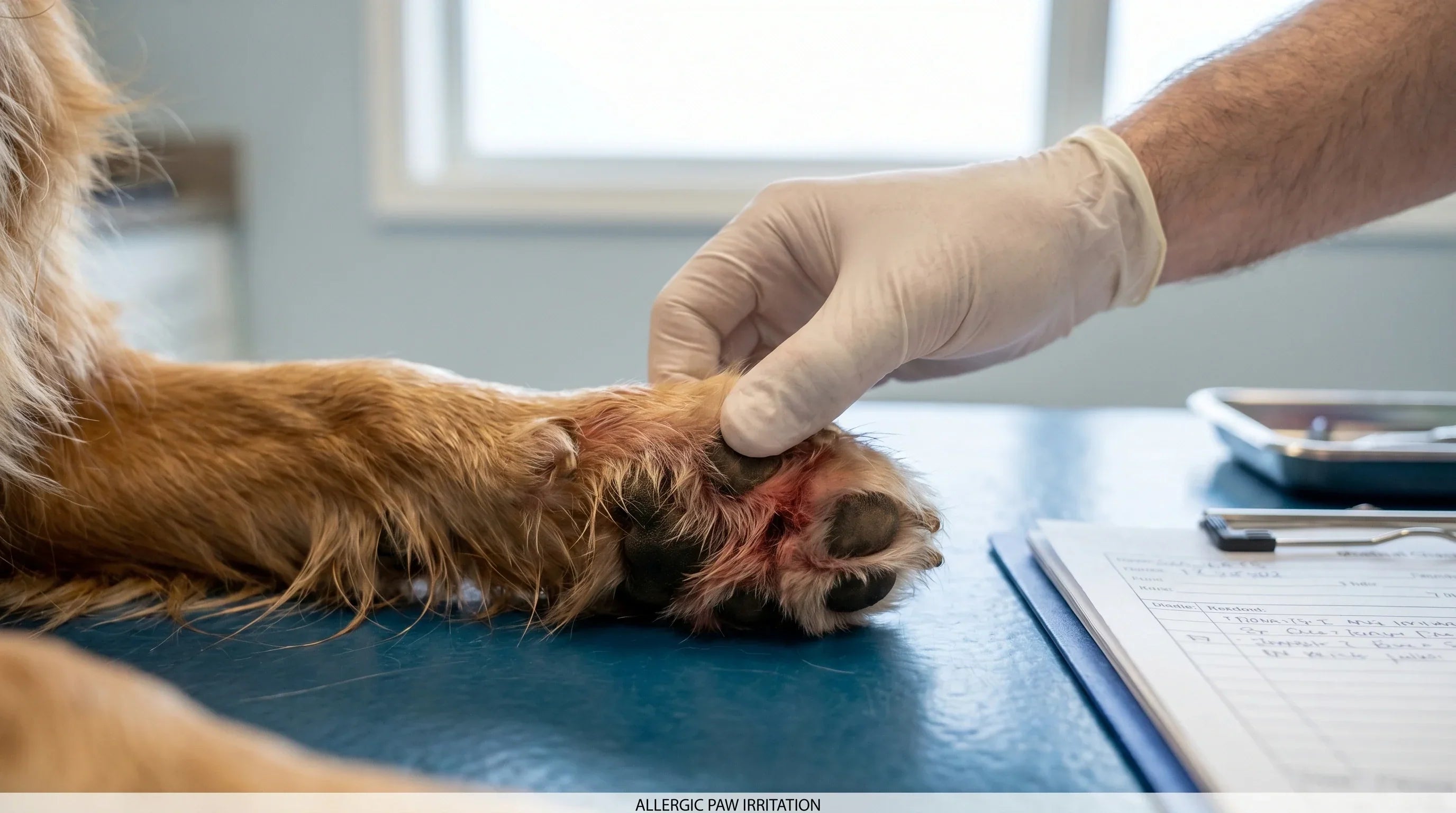
Nothing works. The licking continues. The paws stay red between the toes. The fur is permanently stained brown.
There's a reason: this is allergies, not behavior.
In my Minneapolis practice, I see this scenario weekly. Owners spend months treating the wrong cause. The dogs suffer. By the time they arrive at my office, secondary infections have developed, the licking has become compulsive, and the original allergy is now hidden under multiple layers of complication.
Allergies cause the majority of chronic paw licking in dogs, roughly 55-60% of cases in clinical practice.
If your dog's symptoms include any combination of: persistent paw licking, red skin between toes, brown saliva-stained fur, musty "corn chip" smell, recurring ear infections, or year-round itchiness, this guide is for you.
Here's what's actually happening at the cellular level, why paws specifically are ground zero for canine allergies, and the daily routine that actually breaks the itch-lick-inflame cycle.
If you haven't yet ruled out other causes (injury, anxiety, foreign objects), start with my paw licking diagnostic guide first. This article assumes you've identified allergies as the driver.
Why Paws Specifically?
Owners often ask: "Why my dog's paws, not somewhere else?"
The answer is anatomical. Paws are the highest-exposure surface on a dog's body and the skin between the toes is uniquely vulnerable to allergic reactions.
Three structural reasons:
1. Thin, highly absorbent skin
The interdigital skin (between the toes) is dramatically thinner than skin elsewhere on the body. It has fewer protective layers, less keratin reinforcement, and a much higher density of blood vessels near the surface.
This means allergens penetrate it within seconds, pollen, grass proteins, dust mite particles, lawn chemicals all reach immune cells almost immediately on contact.
2. Constant allergen contact
Your dog walks on the highest-concentration allergen surface imaginable: grass loaded with pollen, floors with dust mites and cleaning chemicals, treated lawns, sidewalks with mold spores.
Every step is exposure. Multiply that by hundreds of steps per day, every day, for years.
3. Moist environment between toes
Saliva from licking + sweat from paw pads creates a warm, moist environment between toes that:
- Enhances allergen absorption (moisture lets molecules penetrate skin faster)
- Encourages bacterial and yeast overgrowth (secondary infections worsen inflammation)
- Disrupts the skin barrier (chronic moisture damages the epidermis)
This is why paws are typically affected first and most severely, in allergic dogs.
The Three Types of Allergies That Affect Paws
Not all paw allergies are the same. Treatment differs based on which type your dog has.
1. Environmental Allergies (Atopic Dermatitis)
The most common type. Triggered by inhaled or contact allergens in the environment.
Common triggers:
- Tree, grass, and weed pollens (seasonal peaks spring and fall)
- Dust mites (year-round, worst in fall/winter when dogs are indoors more)
- Mold spores (damp environments, fall leaves)
- Storage mites (in dry pet food)
- Indoor dust and dander
How to recognize environmental allergies:
- Seasonal worsening (often spring + fall peaks)
- Both front paws affected (sometimes all four)
- Often combined with other symptoms: ear infections, face rubbing, belly itching, scooting
- Symptoms improved by indoor time during peak seasons (vs outdoor)
- Often starts at age 1-3 years (atopic dermatitis usually develops young)
Environmental allergies are typically genetic. Breeds predisposed: Labradors, Golden Retrievers, French Bulldogs, German Shepherds, West Highland White Terriers, Boxers, and many more.
The bad news: environmental allergies are chronic and progressive without intervention. They don't go away on their own. They tend to worsen year over year if untreated.
The good news: they're highly manageable with the right protocol.
2. Food Allergies
Less common than environmental but often missed. Caused by immune reaction to a specific protein or carbohydrate source in the diet.
Common triggers:
- Beef (most common)
- Chicken
- Dairy
- Eggs
- Wheat, corn, soy (less common than proteins)
- Lamb, fish (in dogs sensitized to common alternatives)
How to recognize food allergies:
- Year-round symptoms (no seasonal pattern)
- Often includes digestive symptoms: loose stool, gas, vomiting, increased bowel movements
- Recurring ear infections (sometimes the only symptom besides paw licking)
- Symptoms persist despite environmental treatments
- Often starts before age 1 or after a long period of stable diet
Note: "Grain-free" diets don't address food allergies. Most food allergies are to specific proteins (beef, chicken, dairy), not grains. Switching from grain to grain-free without addressing the protein source doesn't help.
Diagnosis requires an elimination diet trial, 8 to 12 weeks of a novel protein (one your dog has never eaten) or hydrolyzed diet, with NO other foods or treats. This is challenging but the only reliable diagnostic method.
3. Contact Allergies
Least common but often dramatic. Direct allergic reaction to something the paws physically touch.
Common triggers:
- Lawn chemicals (herbicides, pesticides, fertilizers)
- Carpet cleaners and floor disinfectants
- New flooring materials (certain woods, sealants)
- Detergents in bedding or rugs
- Concrete dust (less common but documented)
- Certain fabrics (rare but exists)
How to recognize contact allergies:
- Sudden onset after exposure to something new (new yard treatment, new carpet, recent renovation)
- Localized to contact areas (often paws and belly if dog lies on the surface)
- Improves when exposure is removed
- No seasonal pattern typically (depends on continued exposure)
Contact allergies are usually the easiest to manage once the trigger is identified—remove the trigger, symptoms resolve.
The challenge is identification. Owners often don't connect "new lawn service in March" to "paw licking that started in April."
Why the Itch-Lick-Inflame Cycle Is So Persistent
Understanding this cycle is the key to breaking it.
Once allergic paw inflammation starts, it becomes self-perpetuating. Here's what happens:
Step 1: Allergen contact
Pollen, dust mites, or other allergens reach immune cells under the skin.
Step 2: Immune response
Mast cells release histamine and inflammatory mediators. The result: itch, redness, warmth, swelling.
Step 3: Licking response
The dog feels the itch. Licking provides temporary relief through:
- Physical sensation (overrides the itch signal)
- Endorphin release (mild pleasure response)
- Cooling effect of saliva evaporating
Step 4: Saliva makes it worse
Saliva on inflamed skin:
- Encourages bacterial overgrowth (Staphylococcus, especially)
- Encourages yeast overgrowth (Malassezia, the cause of the "corn chip" smell)
- Stains fur brown (porphyrin oxidation)
- Disrupts skin barrier further
- Adds new inflammation on top of the original allergy
Step 5: Secondary infection develops
Within weeks of chronic licking, most dogs develop secondary bacterial or yeast infection between the toes. This adds:
- More itching
- More licking
- More skin damage
- More inflammation
Now you have THREE problems instead of one:
- Original allergy
- Secondary infection
- Established behavioral habit (licking pattern)
Treating only one of these three doesn't resolve the cycle. This is why so many treatments fail, they address one component while the other two continue driving symptoms.
The protocol that works addresses all three.
The 4-Layer Protocol for Allergic Paw Licking
This is the protocol used in veterinary practice for managing allergic paw conditions. It addresses exposure reduction, skin barrier support, secondary infection control, and immune modulation, the four levers that actually move the disease.
Layer 1: Reduce Allergen Exposure
The first and easiest intervention. Eliminate or reduce contact with allergens whenever possible.
Daily practical steps:
→ Wipe paws after every outdoor outing
Use a damp microfiber cloth or unscented baby wipes. This single habit removes 60-70% of accumulated allergens. Focus on between the toes specifically.
→ Bathe weekly during peak allergy seasons
Lukewarm water + gentle hypoallergenic shampoo. Don't over-bathe, it strips natural oils. Once weekly is enough during high-pollen periods.
→ Wash bedding weekly
In hot water, unscented detergent. Dust mites accumulate in soft surfaces and trigger atopic dogs.
→ HEPA air filtration
For indoor allergen sensitive dogs. Particularly helpful for dust mite and mold-sensitive cases.
→ Avoid recently treated lawns
Grass after pesticide/herbicide application can trigger reactions. Wait 48 hours minimum.
→ Time outdoor walks
Pollen counts are highest mid-morning to early afternoon. Early morning and evening walks reduce exposure.
This alone doesn't fix moderate-severe allergies, but it reduces the baseline allergen load significantly, making everything else more effective.
Layer 2: Support the Skin Barrier
Healthy skin barrier = better defense against allergens. Compromised barrier = more allergen penetration, more inflammation.
The skin barrier of allergic dogs is structurally weaker than healthy dogs, they have less ceramide, fewer lipid layers, more transepidermal water loss. Supporting the barrier reduces allergen penetration at the source.
How to support skin barrier:
→ pH-buffered topical balm
The skin's natural pH is 6.5-7.2. Many topical products are alkaline (soaps, generic balms) and disrupt this. A pH-buffered formula matches natural skin chemistry and supports barrier integrity.
→ Apply between toes specifically
This is where allergic dermatitis is worst and where the barrier is weakest. Daily application supports this vulnerable area.
→ Avoid harsh soaps and alkaline products
These strip natural lipids and weaken the barrier further. Use gentle, pH-appropriate cleansers only.
→ Omega-3 supplementation
EPA and DHA support the skin's lipid layer from the inside. Ask your vet about appropriate dosing for your dog's weight.
A supported skin barrier reduces allergen penetration, reducing the immune trigger before it even reaches deep tissue.
Layer 3: Control Secondary Infections
This step is often skipped, and that's why many treatment protocols fail.
If your dog has been licking for more than a few weeks, assume there's a secondary bacterial or yeast infection until proven otherwise.
Signs of secondary infection:
- Musty "corn chip" smell (classic yeast indicator)
- Brown discharge between toes
- Moist, red skin (bacterial)
- Pustules or sores
- Sudden worsening of symptoms
Treatment requires veterinary diagnosis because:
- Bacterial vs yeast infections need different treatments
- Severity determines topical vs oral medication
- Cytology or culture identifies the specific organism
Common veterinary treatments:
- Topical antifungals (for yeast)
- Topical antibiotics (for mild bacterial)
- Oral antibiotics (for severe bacterial)
- Medicated foot soaks (chlorhexidine-based)
- Combination protocols when both organisms are present
Until secondary infection is controlled, allergic symptoms cannot resolve, even with perfect allergy management elsewhere.
Layer 4: Modulate the Immune Response
For moderate-to-severe allergies, environmental management and topical care aren't enough. The underlying immune dysregulation requires direct intervention.
Modern veterinary options for environmental allergies:
Antihistamines (mild cases)
- Diphenhydramine, cetirizine, chlorpheniramine
- Effective in roughly 20-30% of dogs
- Limited utility but worth trying for mild symptoms
Apoquel (oclacitinib) (moderate-severe cases)
- Targeted JAK inhibitor
- Rapidly effective (within 24 hours)
- Daily oral medication
- Generally well-tolerated
Cytopoint (lokivetmab) (moderate-severe cases)
- Monoclonal antibody injection
- Lasts 4-8 weeks per injection
- Targets IL-31 (key itch mediator)
- Excellent safety profile
Immunotherapy (allergy shots/drops) (moderate-severe cases)
- Custom-formulated based on allergy testing
- Trains immune system to tolerate specific allergens
- Most effective long-term solution
- Takes 6-12 months to see full benefit
- Often allows reduction or elimination of other medications
Corticosteroids (acute flares)
- Effective but with side effects
- Best used short-term for severe flares
- Not appropriate for long-term management
Talk with your vet about which approach fits your dog's severity, your budget, and your management capacity. The right choice varies dramatically by case.
Real-World Treatment Sequences
Here's how I structure treatment for typical cases in practice:
Mild allergic paw licking (occasional licking, mild redness):
- Wipe paws after walks
- Daily pH-buffered balm between toes
- Omega-3 supplement
- Reassess at 4 weeks
Moderate allergic paw licking (daily licking, persistent redness, brown staining):
- All of mild protocol
- Veterinary exam to rule out secondary infection
- Treat secondary infection if present
- Apoquel or Cytopoint trial
- Discuss immunotherapy testing
Severe allergic paw licking (constant licking, raw skin, secondary infection, behavioral component):
- Veterinary intervention required
- Treat infection (often oral + topical)
- Apoquel or Cytopoint for symptom control
- Allergy testing for immunotherapy
- Behavioral modification once physical cause is controlled
- Consider veterinary dermatologist referral
Most owners can manage mild cases at home. Moderate cases benefit from vet partnership. Severe cases require professional treatment, don't try to manage these alone.
What Doesn't Work (And Why)
These are the approaches I see fail most often:
1. Bitter sprays alone
Address behavior, not cause. Dogs in real discomfort keep trying to lick despite taste. Useful as ONE component of a behavioral plan, not as primary treatment.
2. Coconut oil
Doesn't address inflammation or skin barrier dysfunction. Surface coating with no functional benefit for allergies specifically.
3. Anti-itch shampoos as primary treatment
Provide brief relief but don't change the underlying disease. Over-bathing also strips natural oils, weakening the skin barrier.
4. "Grain-free" diet swaps
Most food allergies are to proteins, not grains. Switching from grain to grain-free without changing protein source typically does nothing.
5. Antihistamines only
Effective in only 20-30% of dogs. Worth trying for mild cases but inadequate for moderate-severe allergies.
6. Behavioral training without addressing the underlying allergy
Punishing a dog for licking inflamed, itchy paws is both ineffective and unkind. The licking is a response to genuine discomfort.
7. Long-term steroid use
Provides relief but with significant side effects. Not appropriate for long-term management of chronic allergies. Modern alternatives (Apoquel, Cytopoint) are dramatically safer.
When to See a Vet (Don't Wait)
Allergic paw conditions deserve professional management when:
🚨 Licking creates raw skin, wounds, or hair loss
🚨 Brown staining doesn't improve with consistent care over 4-6 weeks
🚨 Signs of secondary infection (musty smell, discharge, severe redness)
🚨 Symptoms persist or worsen despite consistent home care
🚨 Multiple body areas affected (ears, face, belly + paws)
🚨 Quality of life is affected (sleep disruption, behavior changes)
🚨 You've tried environmental management for 4+ weeks without improvement
Allergies are treatable but require diagnosis and ongoing management. Home care alone manages mild cases. Moderate-to-severe cases need veterinary partnership.
Don't wait for "it to get better on its own." Untreated allergies progress, develop complications, and become harder to manage over time.
A Realistic Outlook
Allergies are chronic. They don't go away.
The dogs whose allergic paw licking is "fixed" are the dogs whose owners commit to ongoing management, daily routine, periodic vet visits, medication if needed.
With proper management, allergic dogs live normal, comfortable lives. The protocol becomes routine. Symptoms become controllable. Quality of life is excellent.
Without management, allergic dogs develop progressive complications, worsening symptoms, chronic infections, behavioral compulsions, and quality of life issues.
The choice isn't "treat or not treat." It's "treat the underlying disease comprehensively, or treat repeated complications forever."
Comprehensive treatment is dramatically less work, less money, and less suffering long-term.
Quick-Start Daily Routine
If your dog has allergic paw licking and you need to start tonight, here's what to do:
Tonight:
- Wipe paws with damp microfiber cloth (focus between toes)
- Inspect for signs of secondary infection (smell, discharge)
- Apply pH-buffered balm to between-toe area
This week:
- Establish daily paw-wipe routine after every outing
- Apply balm twice daily
- Schedule vet appointment if signs of infection or moderate-severe symptoms
This month:
- Continue daily routine
- Track triggers (seasonal? after specific walks? after meals?)
- Veterinary follow-up to assess and adjust
Long-term:
- Make management routine (it's daily, like brushing teeth)
- Adjust seasonally (more aggressive during peak allergen periods)
- Periodic vet check-ins (every 6-12 months for stable cases)
Three months of consistent management transforms most allergic dogs. The work upfront is significant. The long-term payoff is enormous, for both dog and owner.
Your dog can stop licking. The routine just has to address the actual disease, comprehensively.