Written by Dr. Marcus Chen, DVM | June 16, 2026
Your dog's paw pads look like dried-out crusty rocks. The nose has gone from soft and moist to a thick, scaly crust.
You've Googled it. You've found the term hyperkeratosis. Now you need to know one thing:
How do you actually treat it?
In my Minneapolis practice, I see hyperkeratosis cases weekly. Most owners have already tried something—coconut oil, petroleum jelly, generic paw balms—and seen little improvement.
That's because hyperkeratosis doesn't respond to surface moisturizing. It requires a specific treatment approach that addresses the underlying keratin overgrowth at the cellular level.
Here's the step-by-step protocol I use in practice—what works, what doesn't, and exactly how long it should take to see improvement.
Before we start: If you're not yet sure your dog has hyperkeratosis, read this first: What Is Hyperkeratosis? Symptoms and Causes. This guide assumes diagnosis has been confirmed and focuses entirely on treatment execution.
Why Most Hyperkeratosis Treatments Fail
Before we get into what works, let's address why so many owners struggle.
I hear the same frustrations repeatedly:
"I've been applying coconut oil twice a day for two months. Nothing's changed."
"The vet recommended a balm. We used the whole jar. Pads still look the same."
"I tried Vaseline, olive oil, everything. The crust just keeps growing back."
Three reasons these approaches fail:
1. They moisturize the surface but don't soften the buildup
Coconut oil, petroleum jelly, and generic balms create a surface coating. They don't penetrate the hyperkeratotic layer to soften the abnormal keratin underneath. So the surface looks shiny for a few hours, then returns to baseline.
2. They don't address keratin regeneration
Hyperkeratosis is a disorder of keratin production—the cells producing keratin are dysregulated. Simply adding moisture doesn't change the cellular behavior. You need ingredients that modulate keratin synthesis itself, not just sit on top.
3. They're applied without the mechanical step
Softened keratin needs to be physically removed, gently, gradually. Owners who only apply balm (without trimming, softening with warm soaks, or careful exfoliation) leave the buildup intact while moisturizing only the very top layer.
The protocol that actually works addresses all three issues: softens the existing buildup, modulates keratin production, and includes mechanical removal of softened material.
The Step-by-Step Treatment Protocol
This is the protocol I use in practice. It works for both paw pad hyperkeratosis and nasal hyperkeratosis with minor adjustments for each location.
PHASE 1: Softening (Week 1-2)
The goal: Soften the hardened keratin layer so it becomes pliable.
You cannot treat hyperkeratosis effectively while the tissue is rock-hard. Softening comes first. Everything else builds on this.
Daily steps for Phase 1:
Step 1: Warm water soak (10 minutes, daily)
- Use plain warm water (not hot — comfortable to touch)
- For paws: shallow basin, immerse paws fully
- For nose: warm damp cloth held against nose for 5-10 minutes (most dogs tolerate this if introduced gently)
- Do not add salt, soap, or essential oils — they irritate compromised tissue
Why this matters: Warm water hydrates the keratin layer, making it temporarily pliable. This is the prerequisite for everything else. Skipping this step makes balm application nearly useless.
Step 2: Pat dry, don't rub
- Gently pat with a soft towel
- Vigorous rubbing on hyperkeratotic tissue can cause microtears and bleeding
- Leave slightly damp (not wet) — this helps absorption in Step 3
Step 3: Apply softening balm (twice daily)
This is where ingredient choice matters enormously.
What to look for:
- Sea buckthorn oil (high in omega-7 palmitoleic acid — modulates keratin synthesis)
- Vitamin E (antioxidant, supports skin barrier)
- pH-buffered formula (matches natural skin pH of 6.5–7.2)
- Penetrating oils (not just surface waxes)
What to avoid:
- Petroleum jelly as primary ingredient (sits on surface)
- Coconut oil alone (melts at 76°F, doesn't penetrate keratinized tissue effectively)
- Essential oils like tea tree or eucalyptus (can irritate, some are toxic if licked)
- Alkaline products (disrupt skin pH and slow healing)
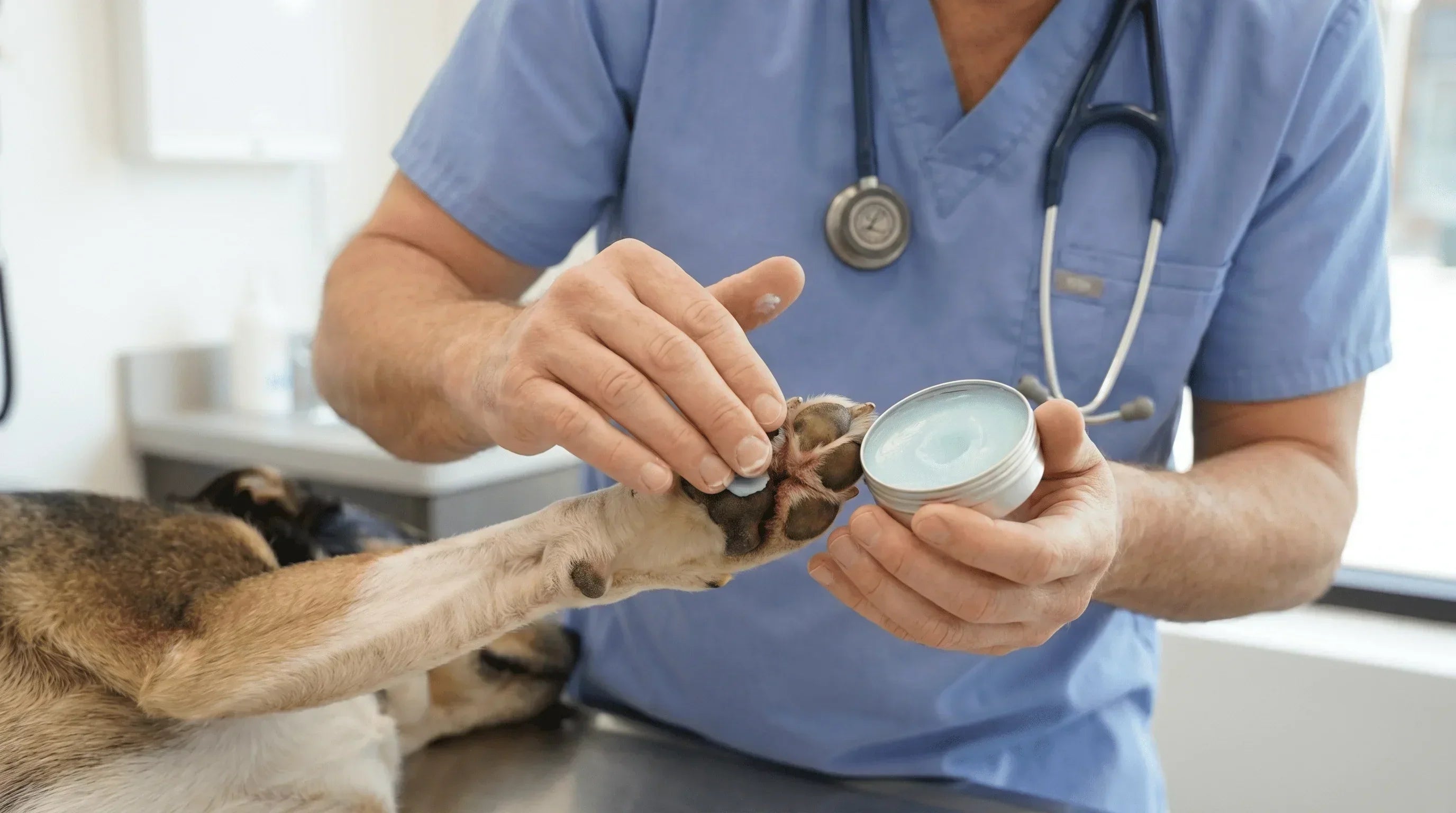
Apply generously: a thin film isn't enough on hyperkeratotic tissue. You need a visible layer that the tissue can slowly absorb over hours.
Step 4: Sock or cone if needed
If your dog licks the balm off within minutes:
- For paws: a soft sock or baby bootie for 30-60 minutes after application
- For nose: brief distraction (chew toy, walk) until balm absorbs
Most dogs stop licking within 15-20 minutes if the balm tastes neutral (avoid sweetened or strongly flavored products that encourage licking).
What to expect at end of Phase 1 (Day 14):
- Paws should look slightly softer when you press them
- Edges of crusty areas may flake slightly (this is good — softened keratin shedding)
- No bleeding (if you see bleeding, you've been too aggressive — back off)
- Color may shift from gray-white to pink-toned
You will NOT see dramatic transformation in 2 weeks. This is normal. Hyperkeratosis is a chronic condition — softening is gradual.
If after 2 weeks you see zero change, that's a sign to see your vet — either the diagnosis needs reconfirmation, or an underlying condition (like zinc-responsive dermatosis or autoimmune disease) requires medication.
PHASE 2: Active Treatment (Week 3-8)
The goal: Reduce the keratin buildup while continuing daily care.
This is where mechanical removal enters the protocol. Done properly, this dramatically accelerates progress. Done improperly, it causes injury.
Daily steps for Phase 2:
Continue Phase 1 routine (warm soak + balm twice daily), AND add:
Step 5: Gentle exfoliation (2-3 times per week)
For paw pads:
- After the warm soak, while tissue is softened
- Use a soft toothbrush in gentle circular motions on the hyperkeratotic area
- 30-60 seconds maximum per pad
- Stop if you see redness or pinpoint bleeding
Alternative: Some owners use a fine-grit emery board (the kind used for human nails) very gently. Same rules: only after soaking, only 30-60 seconds, stop if you see distress.
For nasal hyperkeratosis:
- Do not exfoliate the nose. The skin is too thin and highly vascular.
- Continue softening with warm cloth + balm only.
- If the crust is significant, your vet can carefully trim it under proper conditions.
Step 6: Trim overgrown keratin (weekly, if needed)
For severe paw pad hyperkeratosis with finger-like overgrowths:
- After Phase 1 has softened the tissue
- Use sharp nail trimmers to remove only the SOFTENED outer tips
- Never cut deep — trim only the loose, pliable overgrowth
- When in doubt, leave it longer rather than cutting too short
- Pinkish or moist tissue = STOP immediately
If you're unsure, let your vet do this initially. Watch how they trim, then continue at home weekly.
What to expect at end of Phase 2 (Week 8):
- Significant softening — pads feel more pliable than rock-like
- Reduction in thickness of buildup (maybe 30-50% improvement)
- Healthier color and texture
- Less catching/cracking during walks
- More comfortable dog (less limping, less licking)
Phase 2 timeline note: Severity affects timeline. Mild cases improve dramatically in 4-6 weeks. Severe cases may need 8-12 weeks before substantial visual change.
PHASE 3: Long-Term Maintenance (Week 9+)
The goal: Keep hyperkeratosis from rebuilding.
Hyperkeratosis is chronic. Once you've reduced the buildup, the underlying tendency remains. Stop treatment, and it returns within 2-4 weeks.
Long-term maintenance protocol:
- Daily balm application (once per day, on pad surfaces and nose)
- Weekly warm soak (5 minutes, then reapply balm)
- Monthly exfoliation (gentle toothbrush after warm soak)
- Quarterly vet check (especially if underlying condition exists)
This becomes part of routine care — like brushing teeth or trimming nails. It's not a finite treatment with an "end date."
Most dogs respond well to maintenance and live comfortable lives with minimal visible hyperkeratosis. Some dogs require ongoing veterinary support (oral medications, prescription topicals) — your vet will guide this.
Specific Protocol Variations
For nasal hyperkeratosis specifically:
The nose protocol skips mechanical exfoliation entirely. Nasal tissue is thinner, more vascular, and more sensitive than paw pads.
- Phase 1 + Phase 3 only (skip Phase 2 mechanical steps)
- Apply balm 2-3 times daily during active treatment
- Watch for cracks that bleed — see vet immediately if these appear
- Sun protection matters — UV exposure worsens nasal hyperkeratosis. Limit midday sun if possible.
For senior dogs:
Older dogs (especially 10+) may have slower healing tissue and more sensitive skin.
- Use half the recommended exfoliation frequency (once per week max)
- Longer Phase 1 (3 weeks before adding mechanical steps)
- Watch closely for irritation — senior tissue is less forgiving
For breeds prone to hyperkeratosis:
Breeds like Dogues de Bordeaux, Bulldogs, Boxers, and Bedlington Terriers are genetically predisposed.
- Start Phase 3 maintenance early — even before significant buildup forms
- Daily balm from puppyhood is reasonable for known-susceptible breeds
- More frequent vet checks (every 6 months)
When to See Your Vet
Some hyperkeratosis cases require veterinary support beyond the home protocol:
🚨 No improvement after 4 weeks of consistent Phase 1+2 — the diagnosis may need reconfirmation, or an underlying condition needs treatment
🚨 Cracks that bleed regularly — risk of secondary infection
🚨 Foul odor from the tissue — possible secondary bacterial or yeast infection
🚨 Limping that doesn't resolve as treatment progresses
🚨 Hyperkeratosis appears suddenly in adult dog with no history — may signal underlying disease (autoimmune, zinc deficiency, leishmaniasis in endemic areas)
🚨 Multiple body areas involved beyond paws/nose — may indicate distemper hyperkeratosis or genetic disorder
Veterinary treatments that may be added:
- Topical retinoids (prescription only, modulate keratin production)
- Vitamin A or zinc supplementation (if deficiency-related)
- Antibiotics or antifungals (for secondary infections)
- Immunosuppressive medication (for autoimmune cases)
Most cases respond beautifully to the home protocol. But persistent or severe cases benefit from professional management.
Common Mistakes That Slow Progress
In my practice, these are the most common errors I see:
1. Skipping the warm soak
The single most common mistake. Balm applied to dry, hard hyperkeratotic tissue barely penetrates. Soaking first is non-negotiable for results.
2. Trying to "force" exfoliation
Some owners want to see dramatic results in week 1 and exfoliate aggressively. This causes microtears, bleeding, and secondary infection — and ironically delays healing significantly.
Gentle and consistent beats aggressive and damaging. Every time.
3. Stopping treatment when paws look better
Hyperkeratosis is chronic. The visible improvement at week 6 doesn't mean the underlying condition is "fixed." Stop treatment, and buildup returns within weeks.
Phase 3 maintenance is permanent for most dogs.
4. Using human exfoliation products
Salicylic acid, urea creams, and human cosmetic exfoliants are formulated for human skin. They can be too irritating for dogs, especially on sensitive nasal tissue.
Stick with veterinary-appropriate products designed for canine skin biology and pH.
5. Inconsistent application
Twice daily means twice daily. Three times per week doesn't move the needle. The keratin softening process requires consistent moisture and active ingredients to make progress.
If twice daily is unrealistic for your schedule, once daily is better than nothing — just expect slower progress.
Realistic Timeline Expectations
Here's what I tell clients in practice:
Mild hyperkeratosis (early stage, minimal thickening):
- Visible improvement: 3-4 weeks
- Substantial softening: 6-8 weeks
- Maintenance phase: Week 8+
Moderate hyperkeratosis (clearly thickened, some crusting):
- Visible improvement: 4-6 weeks
- Substantial softening: 8-12 weeks
- Maintenance phase: Week 12+
Severe hyperkeratosis (thick crusty overgrowths, cracks):
- Visible improvement: 6-8 weeks
- Substantial softening: 12-16 weeks
- Maintenance phase: Week 16+
- Often requires veterinary co-management
The dogs whose treatment fails are usually those whose owners give up at week 3 because "nothing's happening." Week 3 is normal for nothing to be happening visibly. The cellular changes haven't yet translated to visible improvement.
Consistency beats perfection. Stick with the protocol.
A Note on Product Selection
The right balm matters more than how often you apply it.
For hyperkeratosis specifically, look for:
- Sea buckthorn oil as a primary ingredient (omega-7 modulates keratin synthesis)
- pH-buffered formula (6.5-7.2 to match natural skin)
- Penetrating oils that absorb into tissue
- Free of essential oils, fragrances, and human cosmetic exfoliants
- Safe if licked (dogs will lick — formulas must be non-toxic)
In my practice, I recommend healing-specific formulas with sea buckthorn over general moisturizing balms. The omega-7 content provides the cellular-level support that surface moisturizers can't.
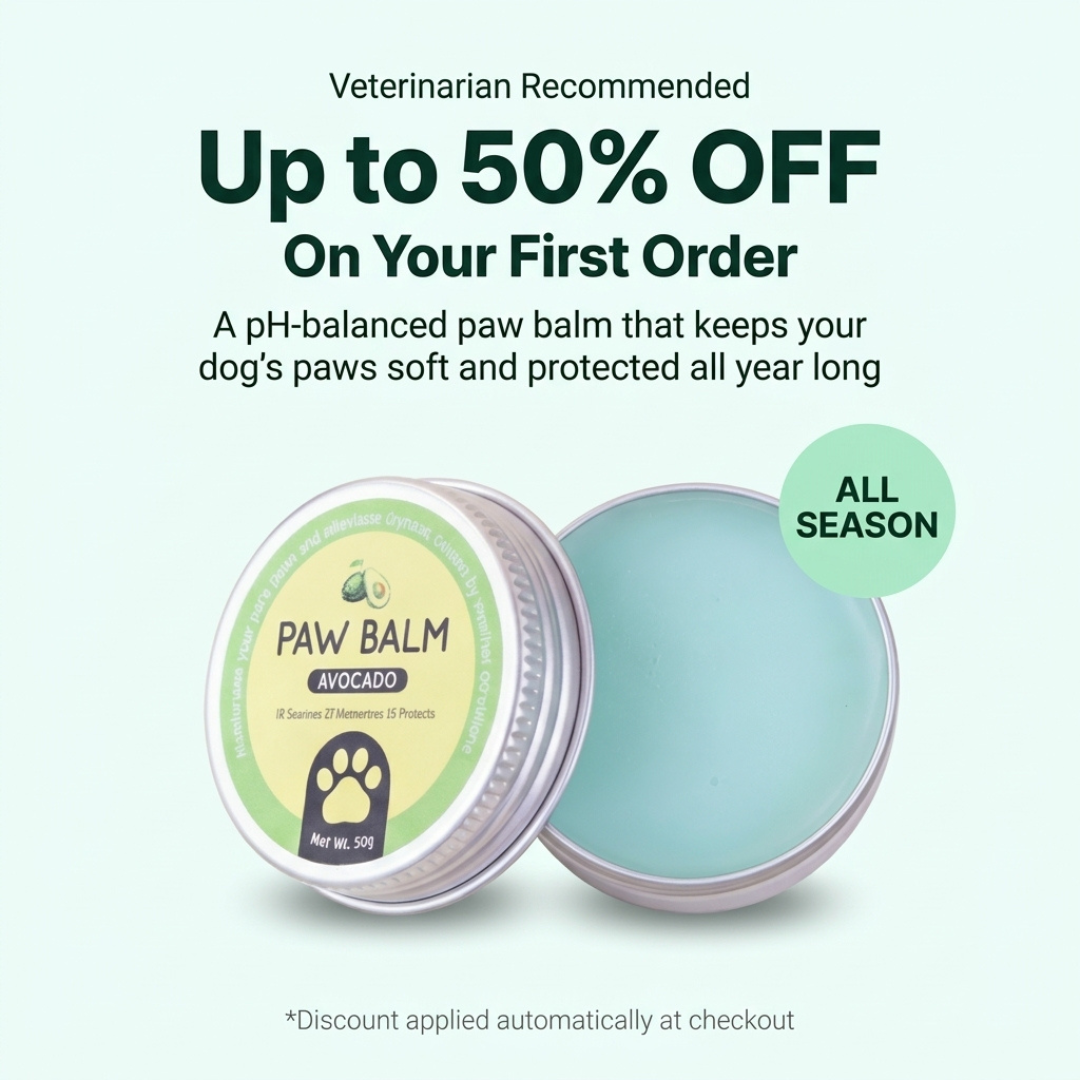
For ongoing maintenance after the buildup is reduced, an all-season formula with avocado butter and pH buffering works well to keep skin healthy without overload.
Final Thoughts
Hyperkeratosis is treatable, not curable.
The protocol above won't make the underlying tendency disappear — that's genetic or systemic. But it will:
✓ Soften existing buildup dramatically
✓ Reduce discomfort and limping
✓ Prevent painful cracking
✓ Keep your dog comfortable long-term
The key insight most owners miss: This is a routine, not a treatment. Like brushing teeth, it's done forever once started. Three weeks of effort followed by stopping accomplishes nothing.
Three months of consistent protocol followed by lifelong maintenance accomplishes everything.
Your dog's paws and nose can look and feel dramatically better. It just takes the right approach, applied consistently.
Start tonight with the warm soak. The rest follows.