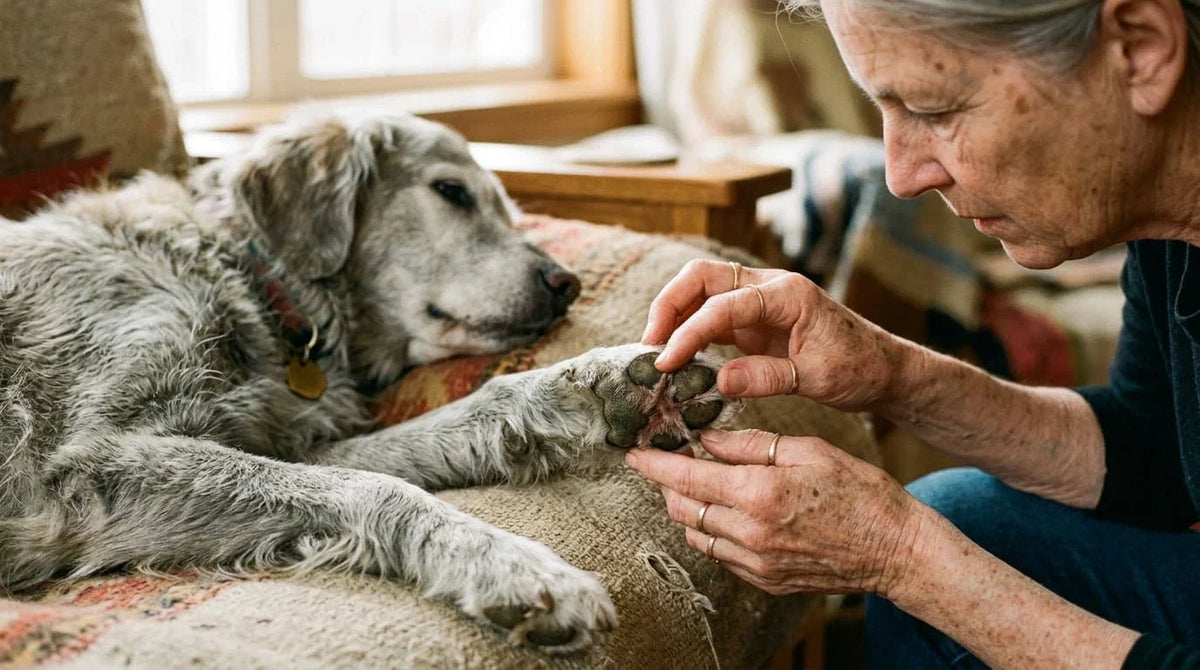
Your dog's paw pads are peeling.
You noticed it during a routine paw check, or when your dog started limping and you looked closer. The tough outer layer of the pad is coming off in patches, revealing pink tissue underneath. It looks alarming.
Then you start Googling and find yourself in a rabbit hole of possible causes: hot pavement, allergies, hyperkeratosis, autoimmune diseases, infections. Which one is it? What do you do?
In my Minneapolis practice, paw pad peeling is one of the most common concerns dog owners bring to me in summer. It's also one of the most misdiagnosed. Most owners assume it's just dryness and reach for coconut oil or petroleum jelly. Those products don't help because peeling isn't a moisture problem, it's a tissue problem.
The peeling is a symptom. The cause determines the treatment. Getting the wrong diagnosis means months of ineffective care while the actual problem worsens.
Here's what I want you to understand: there are five main causes of paw pad peeling in dogs, and they require dramatically different approaches. Some resolve quickly with proper care. Others signal underlying conditions that need veterinary intervention. Some products help. Others make certain causes worse.
This guide walks you through how to identify what's actually happening, what to do about it, and when you need veterinary help.
If your dog has active bleeding, deep wounds, or shows signs of severe pain, skip this article and see a vet immediately. This guide is for the more common presentations of gradual peeling.
What Paw Pad Peeling Actually Is
Before we talk about causes, let's understand what you're looking at.
Dog paw pads have a specific structure: a tough outer layer (the stratum corneum) made of dense keratinized cells, sitting on top of a softer dermis with blood vessels and nerve endings.
When this outer layer starts coming off in patches, it's called desquamation. Normal skin turnover is invisible, dead cells slough off individually. When you can see peeling, the outer layer is coming off in larger sections than normal turnover produces.
This tells you something is happening to the pad tissue:
- Damage to the outer layer (chemical or thermal injury)
- Abnormal keratin production (making excess or defective tissue)
- Underlying inflammation disrupting the tissue's structure
- Immune attack on the pad tissue itself
- Infection causing tissue breakdown
The peeling itself is the visible symptom. The underlying cause is what matters for treatment.
The 5 Main Causes of Paw Pad Peeling
Let me walk through each cause with the signs that distinguish it, so you can identify what's happening with your dog.
Cause 1: Hot Pavement Burns (Most Common in Summer)
In summer months, this is the single most common cause of paw pad peeling I see in practice.
Pavement at 125°F causes tissue damage within 60 seconds of contact. At 145°F, damage occurs almost immediately. Most owners dramatically underestimate ground temperatures because they're wearing shoes and their hands are far from the pavement.
What hot pavement peeling looks like:
- Sudden onset after a walk in warm weather
- Both front paws often affected (especially in dogs who pull on leash)
- Rear paws sometimes affected but usually less severely
- Central pad area typically shows peeling first
- Pink, sensitive tissue exposed underneath
- May be accompanied by blisters in acute cases
- Dog is often limping or licking paws afterward
- Peeling appears within 24-48 hours of the walk
How to know it's hot pavement:
Timeline is the tell. If the peeling started after a specific walk in warm weather (especially midday in summer), and both front paws are affected, hot pavement burns are your primary suspect.
Treatment:
Immediate care:
- Cool the paws with cool (not ice cold) water for 10-15 minutes
- Do not apply ice directly—can cause further tissue damage
- Assess severity: mild redness vs blisters vs deep tissue damage
- See a vet for anything beyond mild redness
Ongoing care for mild burns:
- Keep paws clean and dry
- Apply sea buckthorn-based healing balm (omega-7 supports tissue regeneration)
- Avoid all hot surfaces during healing (12-14 days minimum)
- Walk only on grass or shaded cool surfaces
- Booties for necessary outings
Timeline: Mild burns heal in 7-14 days with proper care. Severe burns take 2-4 weeks and may require veterinary treatment.
Prevention: Use the 7-second test if the pavement is too hot for your hand after 7 seconds, it's too hot for paws.
Cause 2: Allergic Dermatitis (Common Year-Round)
Allergies affect paws more than most owners realize. In fact, about 55-60% of chronic paw problems have allergic origins.
What allergic peeling looks like:
- Gradual onset (weeks to months, not sudden)
- Both front paws typically affected, sometimes all four
- Peeling on pads AND between toes
- Brown saliva staining on fur
- Musty "corn chip" smell (yeast overgrowth)
- Excessive paw licking as primary behavior
- Often accompanied by ear infections, face rubbing, belly itching
- Fluctuates with seasons or diet changes
How to know it's allergies:
The combination of chronic licking + brown fur staining + involvement between toes + other body symptoms is highly suggestive of allergic dermatitis. Peeling is often secondary to the licking behavior—the constant moisture and mechanical action breaks down the pad surface.
Treatment:
Allergic peeling requires addressing four separate issues:
- Allergen exposure (identify and reduce)
- Skin barrier support (pH-buffered balm)
- Secondary infections (usually yeast or bacterial—may need veterinary treatment)
- Immune response modulation (antihistamines, Apoquel, Cytopoint, or immunotherapy)
Treating only one component while ignoring others is why most allergic paw treatments fail.
Related: The complete 4-layer protocol for allergic paw dermatitis
Timeline: Allergic paw improvement takes 4-8 weeks with comprehensive treatment. Fully resolving symptoms is often impossible—but management can be excellent.
Cause 3: Hyperkeratosis (Chronic Overgrowth)
Hyperkeratosis is excess keratin production, and the paw pads are one of the most common locations.
What hyperkeratotic peeling looks like:
- Slow progression over months or years
- Thick, hardened pads with rough texture
- Peeling of dry, thickened tissue rather than moist tissue
- Sometimes finger-like projections growing from pad edges
- Often accompanied by nasal hyperkeratosis (crusty nose)
- Peeling reveals more thickened tissue underneath, not soft tissue
- Dog may be uncomfortable on hard surfaces
- Cracks may develop and bleed occasionally
How to know it's hyperkeratosis:
The key distinction is that hyperkeratotic peeling is from abnormally thick tissue, while other peeling reveals normal-thickness tissue underneath. If the pads are visibly thicker than normal AND peeling, hyperkeratosis is the primary suspect.
Breeds predisposed: Labrador Retrievers, Golden Retrievers, English and French Bulldogs, Boxers, Cavalier King Charles Spaniels, Bull Terriers.
Treatment:
Hyperkeratosis requires a specific 3-phase protocol:
- Phase 1 (Weeks 1-2): Soften with warm soaks + sea buckthorn balm twice daily
- Phase 2 (Weeks 3-8): Add gentle exfoliation 2-3x/week
- Phase 3 (Week 9+): Lifetime maintenance, hyperkeratosis is chronic
Standard moisturizers fail because they don't address the underlying keratin regulation problem. Sea buckthorn oil (omega-7) modulates keratin synthesis at the cellular level—which is what these pads actually need.
Related: The complete step-by-step hyperkeratosis treatment protocol
Timeline: Visible improvement takes 4-8 weeks. Full management is lifelong.
Cause 4: Contact Irritation and Chemical Damage
Chemicals your dog walks on can damage paw pads and cause peeling.
Common culprits:
- Ice melt chemicals (calcium chloride, sodium chloride, magnesium chloride)—especially damaging
- Lawn chemicals (herbicides, pesticides, fertilizers)
- Cleaning products (bleach residue, floor cleaners, disinfectants)
- Concrete dust during construction
- Sap and plant materials in wooded areas
- Salt water from beaches (with sand abrasion)
- Pool chemicals from swimming areas
What chemical peeling looks like:
- Onset after specific exposure (new lawn treatment, winter walks, home cleaning)
- Both front paws typically affected
- May affect all four paws if walking through the substance
- Peeling within 24-72 hours of exposure
- Sometimes accompanied by redness or swelling
- Dog may lick paws excessively trying to remove irritant
- Improves when exposure stops
How to know it's chemical damage:
Timeline matters. If peeling appeared shortly after a specific chemical exposure (new lawn service, ice melt use, cleaning products), and improves with exposure elimination, chemical irritation is likely.
Treatment:
Immediate care:
- Rinse paws thoroughly with lukewarm water
- Wash gently with mild soap if chemical residue is present
- Dry completely to prevent secondary infection
- Apply pH-buffered healing balm
Ongoing:
- Identify and eliminate the offending exposure
- Wipe paws after every outing during recovery
- Support pad regeneration with sea buckthorn-based balm
- Boots for necessary walks through affected areas
Timeline: Chemical damage typically resolves in 1-3 weeks once exposure is eliminated. Chronic exposure causes progressive damage that takes months to fully heal.
Related: Why ice melt chemicals cause severe paw damage in winter
Cause 5: Autoimmune and Systemic Conditions (Less Common but Serious)
Some paw pad peeling signals underlying disease. These are less common but important to recognize because they need veterinary treatment—home care alone won't help.
Conditions that can cause paw pad peeling:
- Pemphigus foliaceus (autoimmune skin disease)
- Discoid lupus erythematosus
- Systemic lupus erythematosus
- Zinc-responsive dermatosis (in Northern breeds)
- Superficial necrolytic dermatitis (associated with liver disease)
- Cutaneous drug reactions
- Certain viral or bacterial infections
What autoimmune/systemic peeling looks like:
- Sudden onset in an adult dog with no clear cause
- Involvement of nose AND paw pads simultaneously
- Ulceration or open wounds rather than just peeling
- Loss of pigmentation on pads or nose
- Involvement of face, ears, or genitals
- Weight loss, decreased appetite, or lethargy
- Does NOT improve with typical paw care
- Progressive worsening despite treatment
How to know it's serious:
Any of these signs warrants immediate veterinary evaluation:
- Peeling combined with nose crusting AND ulceration
- Loss of pigmentation
- Systemic symptoms (weight loss, lethargy)
- No improvement after 4 weeks of appropriate home care
- Sudden severe onset
Treatment:
These conditions require veterinary diagnosis (usually biopsy) and prescription treatment:
- Immunosuppressive medications for autoimmune diseases
- Zinc supplementation for zinc-responsive dermatosis
- Treatment of underlying disease (liver, hormonal)
- Long-term specialist management
Home care alone is insufficient for these conditions. If you suspect systemic involvement, see your vet promptly.
How to Identify Your Dog's Cause: A Simple Framework
Ask these questions in order:
Question 1: Did this start suddenly after a specific event?
- Yes, after a walk in warm weather → Hot pavement burn
- Yes, after chemical exposure → Chemical damage
- Yes, but no clear trigger + severe → See vet (possible autoimmune)
- No, gradual over months → Continue to Q2
Question 2: Is your dog constantly licking paws?
- Yes, plus brown staining, ear infections, itching elsewhere → Allergies
- Some licking but not primary behavior → Continue to Q3
Question 3: Are the pads visibly thicker than normal?
- Yes, hardened and rough → Hyperkeratosis
- Normal thickness, just peeling → Continue to Q4
Question 4: Are there other body areas affected?
- Yes, especially nose ulceration or pigment loss → See vet (possible autoimmune)
- No, just paws → Likely mild irritation, environmental damage, or early hyperkeratosis
When in doubt: see your vet. Misdiagnosing paw pad peeling means months of ineffective treatment while the actual problem progresses.
What Actually Helps: Treatment by Cause
Different causes need different treatments. Here's what works for each:
| Cause | What Helps | What Doesn't Help |
|---|---|---|
| Hot pavement burns | Cool water, sea buckthorn balm, avoid heat 2 weeks | Ice, petroleum jelly, ignoring |
| Allergic dermatitis | pH-buffered balm, allergen reduction, vet-guided immune modulation | Bitter sprays alone, single-component treatment |
| Hyperkeratosis | Sea buckthorn oil, warm soaks, gentle exfoliation (weeks) | Coconut oil, petroleum jelly, aggressive scrubbing |
| Chemical damage | Rinse, gentle balm, exposure elimination | Continued exposure, ignoring source |
| Autoimmune/systemic | Veterinary diagnosis, prescription treatment | Home care alone, delay |
Universal principles for ALL causes:
- ✅ Keep paws clean and dry
- ✅ Use pH-buffered products matching dog skin (6.5-7.2)
- ✅ Sea buckthorn-based balm supports tissue healing
- ✅ Monitor for signs of infection (discharge, worsening odor, spreading redness)
- ❌ Avoid petroleum jelly as primary treatment
- ❌ Avoid coconut oil alone (surface only, no cellular support)
- ❌ Avoid essential oils (irritating, potentially toxic if licked)
The Ingredients That Actually Support Pad Healing
Peeling pads need active support at the tissue level. Look for these ingredients:
Sea buckthorn oil — omega-7 palmitoleic acid supports keratin regulation and cellular repair. The single most valuable ingredient for damaged pad tissue.
Vitamin E — antioxidant protection during tissue regeneration.
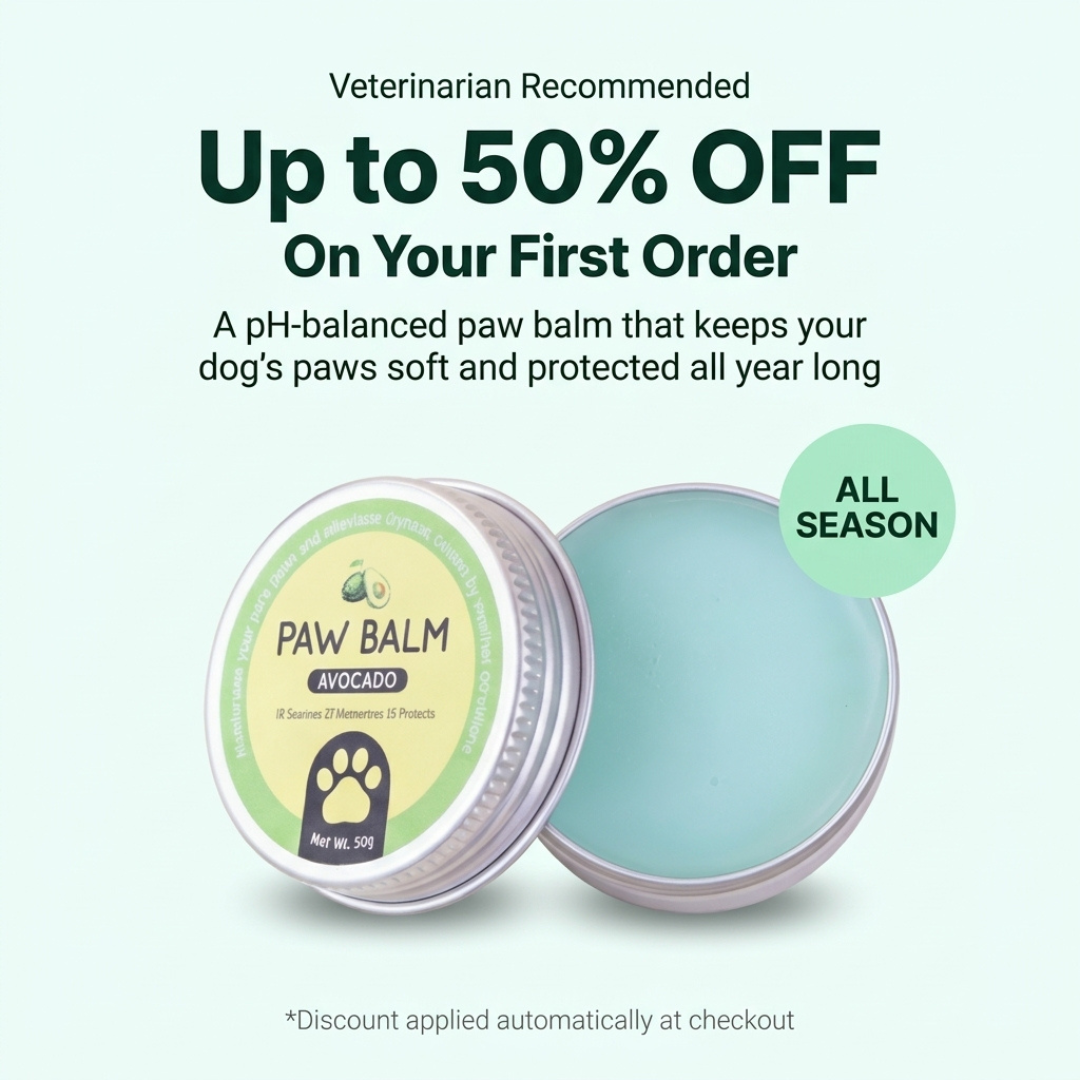
Avocado butter — matches dog skin's lipid profile, penetrates rather than coating.
Shea butter — provides barrier protection for healing tissue.
pH-buffered formulation — critical for compromised skin. The wrong pH damages already-vulnerable healing tissue.
Avoid any product with essential oils, alcohol, artificial fragrances, or petroleum jelly as the primary ingredient.
Related: Complete guide to reading paw balm ingredient labels
When to See a Veterinarian
Home care is appropriate for:
- Mild hot pavement burns (redness only, no blistering)
- Suspected allergies as first step before vet visit
- Mild chemical irritation with clear resolving trend
- Early hyperkeratosis in known predisposed breeds
See a vet immediately for:
🚨 Deep wounds or bleeding that doesn't stop with gentle pressure
🚨 Severe pain (yelping, refusing to walk, elevated heart rate)
🚨 Peeling combined with nose ulceration (possible autoimmune)
🚨 Loss of pad pigmentation (autoimmune sign)
🚨 Systemic symptoms: lethargy, decreased appetite, fever
🚨 Rapid progression worsening over 24-48 hours
🚨 No improvement after 2-3 weeks of appropriate home care
🚨 Recurrent peeling that resolves and returns repeatedly
🚨 Blisters or fluid-filled lesions
🚨 Involvement of multiple body areas beyond just paws
Getting the correct diagnosis matters. A 20-minute vet visit for an unclear peeling case saves weeks of ineffective home treatment.
Prevention: Reducing Future Peeling Episodes
Once you've identified the cause, prevention becomes possible.
For hot pavement burns:
- Test pavement with your hand (7-second test) before every summer walk
- Walk early morning or late evening during hot weather
- Choose grass and shaded surfaces
- Consider booties for necessary hot-weather walks
For allergic peeling:
- Wipe paws after every outing (removes 60-70% of allergens)
- Consistent daily balm application for barrier support
- Address underlying allergies with vet guidance
- Weekly bathing during peak allergy seasons
For hyperkeratosis:
- Daily maintenance protocol (permanent, not temporary)
- Start proactive care if your breed is predisposed
- Regular vet checks to catch worsening early
For chemical damage:
- Rinse paws after any potential chemical exposure
- Avoid recently treated lawns (wait 48 hours minimum)
- Consider booties in winter on salted surfaces
- Read cleaning product labels and use pet-safe alternatives
For autoimmune/systemic causes:
- Regular vet monitoring if your dog has known conditions
- Consistent medication schedules if prescribed
- Report changes promptly rather than waiting
The universal principle: address causes, don't just treat symptoms.
A Realistic Outlook
Most paw pad peeling resolves with appropriate treatment.
Simple causes (hot pavement, mild chemical irritation) resolve in 1-3 weeks with proper care and elimination of exposure.
Chronic causes (allergies, hyperkeratosis) require ongoing management rather than one-time treatment. These aren't "cured"—they're managed. With proper protocols, dogs live comfortable normal lives.
Serious causes (autoimmune, systemic disease) require veterinary partnership and prescription treatment. Home care alone won't be enough.
The dogs whose peeling resolves quickly are those whose owners identify the actual cause and treat it appropriately. The dogs with chronic ongoing peeling are usually those whose owners applied generic "moisturizer" treatments to a specific medical problem.
Your dog's paws can heal. They just need the right treatment for the actual cause.
Start with identification. The right care follows.