

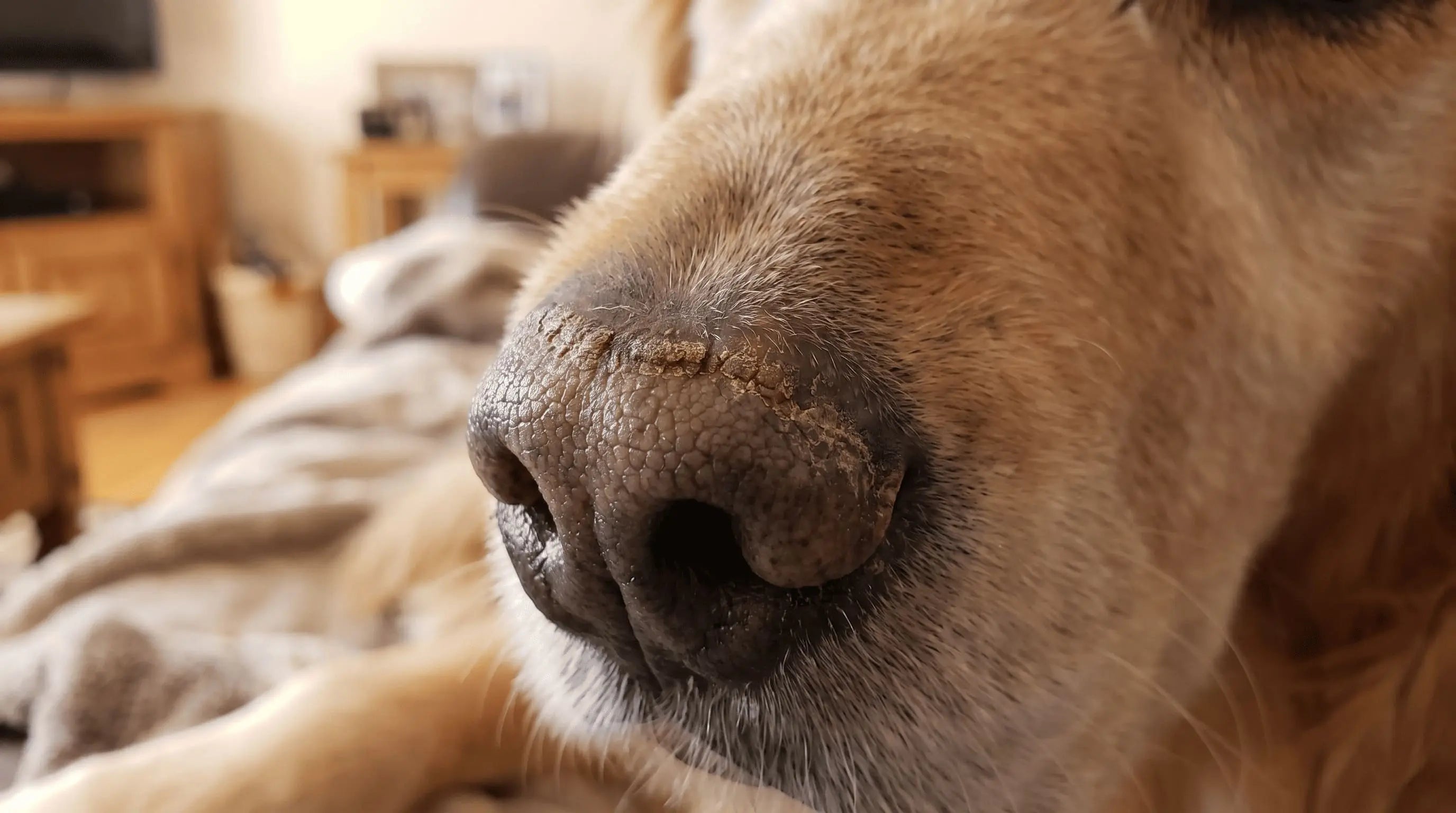
Your dog's nose used to be soft and moist. Now it's thick, crusty, sometimes cracked, occasionally bleeding.
You've been applying chapstick. Coconut oil. Petroleum jelly. Maybe a "nose butter" product. Nothing seems to make a lasting difference.
In my Minneapolis practice, this is one of the most common concerns senior dog owners bring to me. Nasal hyperkeratosis is dramatically more common than most owners realize, and it's one of the most misunderstood conditions in canine care.
Here's what's actually happening at the cellular level: the tissue on top of your dog's nose is producing keratin faster than it should. That keratin builds up in layers, creating the thick, rough, hardened texture you're seeing. It's not dryness. It's not dehydration. It's a keratin regulation problem and applying surface moisturizers doesn't address it.
The good news: most cases respond beautifully to the right protocol. The frustrating truth: the products most owners reach for don't work because they weren't designed for this condition.
Let me walk you through what's actually happening, why it matters medically, and the specific treatment approach that works.
If your dog also has paw pad hyperkeratosis (thick, crusty pads), read my complete step-by-step treatment protocol for paw hyperkeratosis. The nose protocol shares some principles but requires important modifications, which we'll cover here.
What Nasal Hyperkeratosis Actually Is
Hyperkeratosis literally means "excessive keratin production." In the nose, this manifests as:
- Thickened tissue on the top surface of the nose (the "planum nasale")
- Rough, sometimes crusty texture replacing the normal smooth surface
- Gray or brown discoloration in advanced cases
- Cracks or fissures that can bleed
- Loss of the natural moist appearance
- Sometimes finger-like projections in severe cases
Normal dog noses have specific characteristics: smooth cobblestone-like texture, slightly moist appearance (from tear duct drainage and licking), pigmented color matching the breed standard, and softness that lets the tissue flex slightly with facial movement.
Hyperkeratotic noses lose all of these features progressively. The tissue becomes rigid instead of flexible. The surface becomes rough instead of smooth. The natural moisture disappears. In advanced cases, cracks develop that can bleed with normal activity like sniffing or drinking.
Why the nose specifically?
The planum nasale is a highly specialized tissue, it's more like leathery skin than regular skin, adapted for the intense sensory function of canine smelling. This unique tissue is uniquely prone to keratinization when regulation goes wrong.
Also: the nose is constantly exposed. Sun, cold, dry air, environmental contact. Every environmental insult adds cumulative stress to already-stressed regulatory systems.
Why Some Dogs Get Nasal Hyperkeratosis
Nasal hyperkeratosis has multiple causes, and correct treatment depends on identifying which category applies.
1. Idiopathic Nasal Hyperkeratosis (Most Common)
"Idiopathic" means "no identified cause." In practice, this is the largest category.
- Develops gradually over months or years
- No underlying disease detectable
- More common in senior dogs
- Runs in certain breeds (genetic predisposition)
- Chronic and progressive without intervention
- Usually responds well to topical treatment
Breeds predisposed:
- Labrador Retrievers
- Golden Retrievers
- Bulldogs (English and French)
- Boxers
- Cavalier King Charles Spaniels
- Cocker Spaniels
- Bull Terriers
If your dog is one of these breeds and has gradual-onset nasal hyperkeratosis without other symptoms, this is likely idiopathic.
2. Age-Related Hyperkeratosis
Senior dogs commonly develop hyperkeratosis due to age-related changes:
- Slower cellular turnover
- Reduced regulatory efficiency
- Cumulative environmental exposure
- Circulation changes affecting tissue support
- Chronic mild inflammation
This is essentially idiopathic hyperkeratosis in older dogs, but the mechanism is age-related rather than genetic.
Response to treatment is usually good but slower than in younger dogs. Expect longer timelines and be patient.
Related: What changes in senior dog paws and nose care after age 7
3. Distemper Hyperkeratosis (Less Common Today)
Historically the most feared cause. Canine distemper virus attacks multiple systems, and one late-stage sign is severe hyperkeratosis of the nose AND paw pads (giving distemper its historic nickname "hard pad disease").
- Occurs weeks or months after acute distemper infection
- Affects unvaccinated or under-vaccinated dogs
- Usually accompanied by neurological signs
- Requires veterinary diagnosis and management
- Rare in modern well-vaccinated populations but not eliminated
If your dog has severe hyperkeratosis on BOTH nose and pads with neurological symptoms (twitching, seizures, coordination issues), see a vet immediately.
4. Autoimmune Conditions
Several autoimmune diseases can cause nasal hyperkeratosis:
- Pemphigus complex (multiple variants)
- Discoid lupus erythematosus
- Systemic lupus erythematosus
- Uveodermatological syndrome
Signs suggesting autoimmune cause:
- Sudden or rapid onset
- Loss of pigmentation
- Ulceration and erosion (not just crusting)
- Extension beyond just the top of the nose
- Involvement of other body areas
- Puppyhood onset
These conditions require veterinary diagnosis (usually biopsy) and prescription immunosuppressive treatment. Topical care alone won't be sufficient.
5. Zinc-Responsive Dermatosis
Some dogs (particularly Northern breeds) have impaired zinc absorption, leading to skin symptoms including nasal hyperkeratosis.
- Most common in Siberian Huskies, Alaskan Malamutes, Samoyeds
- Also seen in Great Danes and other giant breeds on inadequate diets
- Usually accompanied by skin issues elsewhere
- Responds dramatically to zinc supplementation
If your Husky or Malamute has nasal crusting, ask your vet about zinc-responsive dermatosis testing.
6. Leishmaniasis (Regional)
In areas where leishmaniasis is endemic (Mediterranean regions, parts of Central and South America, some southern US regions), this parasitic disease can cause nasal hyperkeratosis.
- Usually accompanied by other signs (weight loss, lymphadenopathy, kidney issues)
- Requires veterinary diagnosis and specific treatment
- Consider if your dog has traveled to endemic areas or lives in one
How to Tell What Type You're Dealing With
Ask yourself these questions:
Onset:
- Gradual over months? → Likely idiopathic or age-related
- Sudden or rapid? → Consider autoimmune, distemper, or systemic disease
Location:
- Just top of nose? → Idiopathic pattern
- Extends to lip area or other skin? → Consider autoimmune
- Both nose AND paws severely affected? → Consider distemper, pemphigus foliaceus
Other symptoms:
- None besides the nose? → Likely idiopathic
- Multiple body areas or systemic signs? → Underlying disease likely
Age:
- Senior dog, gradual onset? → Age-related idiopathic
- Young dog with sudden onset? → Consider genetic, autoimmune, nutritional
Response to home treatment:
- Improves with topical protocol over 4-6 weeks? → Idiopathic/age-related confirmed
- No improvement despite consistent treatment? → Vet evaluation needed
When in doubt, see your vet. Some causes require specific medical treatment that topical care can't address.
The Nasal Hyperkeratosis Treatment Protocol
Here's the protocol I use in practice for idiopathic and age-related nasal hyperkeratosis.
Important: This protocol assumes you've either confirmed idiopathic hyperkeratosis with your vet, or you're beginning conservative topical treatment while monitoring for signs that suggest underlying disease.
Phase 1: Softening (Weeks 1-3)
Goal: Rehydrate and soften the hardened keratin layer.
The nose protocol is dramatically gentler than the paw protocol, nasal tissue is thin, highly vascular, and cannot tolerate mechanical exfoliation. Never scrub, brush, or abrade nasal tissue.
Daily routine:
Step 1: Warm compress (5-10 minutes, once or twice daily)
- Use a soft cloth soaked in warm (not hot) water
- Hold gently against the nose for 5-10 minutes
- Introduce gradually if your dog resists — many tolerate it well with patience
- Do not force, some dogs never accept this and skip to Step 2 directly
The warm compress hydrates the keratin layer and makes it more receptive to topical treatment.
Step 2: Pat dry gently
Never rub. Never scrub. Just pat with a soft cloth.
Step 3: Apply softening balm (twice daily)
Ingredient criteria for nasal application:
✓ Sea buckthorn oil (omega-7 modulates keratin synthesis)
✓ pH-buffered formula (6.5-7.2 to match skin biology)
✓ Penetrating oils rather than surface waxes
✓ Safe if licked (dogs will lick their noses inevitably)
✓ Free of essential oils (nose tissue is especially sensitive)
✓ No alcohol (drying, damaging)
Apply a generous layer, not just a light film. Nasal tissue absorbs slowly, so more product allows for extended absorption.
Step 4: Distract briefly if needed
Most dogs will lick balm off their noses within seconds. That's fine as long as the product is safe if licked. Give them a chew toy or brief attention for 2-3 minutes to allow initial absorption before licking begins.
What to expect at end of Phase 1 (Week 3):
- Nose looks slightly softer on gentle touch
- Some flaking may occur as softened keratin sheds naturally
- Color may shift from gray-white toward pinker tones
- Any cracks should be beginning to close
- No worsening (any worsening signals underlying condition)
Don't expect dramatic transformation in 3 weeks. Nasal hyperkeratosis responds slowly.
Extended Phase 1 for nose: Unlike paw hyperkeratosis (2 weeks Phase 1), nasal hyperkeratosis benefits from 3 weeks of pure softening before considering any additional interventions. The tissue is more delicate and needs more time.
Phase 2: Continued Softening + Monitoring (Weeks 4-8)
Goal: Continue softening and observe progress.
Continue Phase 1 routine. Add these observations:
Photographic tracking:
- Photo the nose weekly in same lighting
- Compare to Week 0 baseline photo
- Objective assessment of progress
Progress markers to watch:
- Softening on touch (should be clearly detectable by Week 6)
- Reduction in visible crustiness
- Color shift toward healthier pink tones
- Any cracks healing and NOT reopening
- Return of slight natural moisture (some dogs see this)
If NO progress by Week 6:
- Reconsider the diagnosis
- Consider vet visit for underlying condition workup
- Ask about biopsy if lesions look unusual
Continue Phase 2 until:
- Substantial improvement is visible
- Nose feels significantly softer
- No active cracking or bleeding
- You've reached Week 8
Phase 3: Long-term Maintenance (Week 9+)
Nasal hyperkeratosis is chronic. Once you've reduced buildup, you must maintain to prevent return.
Maintenance routine:
- Daily balm application (once per day is usually sufficient)
- Weekly warm compress (5 minutes)
- Monthly photo comparison (catch regression early)
- Quarterly vet check for chronic cases
Timeline reality:
Idiopathic hyperkeratosis cannot be cured. It can only be managed. Stop treatment, and buildup returns within 2-4 weeks.
This becomes part of daily routine — like brushing teeth or trimming nails. Owners who embrace this framing see excellent long-term results. Owners who expect a "cure" become frustrated when it returns.
Products and Ingredients That Actually Work
The right ingredients matter enormously for nasal application.
Sea buckthorn oil, the primary active ingredient for keratin regulation. Omega-7 palmitoleic acid modulates keratin synthesis at the cellular level, which is what nasal hyperkeratosis actually needs. Also anti-inflammatory and rich in vitamins A, C, E, and K.
pH-buffered formulation, Critical for nasal tissue. The wrong pH damages already-compromised skin barrier. Look for products that specify 6.5-7.2 pH range for dog skin.
Vitamin E, Antioxidant support, extends product life, supports cellular repair.
Quality butters (avocado, shea), Provide penetrating moisture without surface-only coating. Avocado butter's fatty acid profile matches canine skin lipids well.
What NOT to use on dog noses:
❌ Petroleum jelly / Vaseline / chapstick — creates surface coating, doesn't penetrate or support cellular processes. Not safe in significant licked quantities.
❌ Coconut oil alone — melts at 76°F (24°C), so provides no lasting protection. Doesn't penetrate keratinized tissue effectively.
❌ Essential oils — Many are toxic if licked, and dogs WILL lick their noses. Tea tree, eucalyptus, peppermint especially dangerous.
❌ Human moisturizers — Wrong pH, formulated for different skin biology. Can worsen the condition.
❌ Alcohol-based products — Dry out already-compromised tissue.
❌ Sunscreen unless specifically vet-recommended — Some human sunscreens contain ingredients toxic to dogs. If sun exposure is a concern, ask your vet for dog-safe options.
Related: Complete guide to reading dog paw balm ingredient labels
When Nasal Hyperkeratosis Signals Serious Disease
Some nasal hyperkeratosis is NOT idiopathic. These signs suggest something more serious:
🚨 Sudden rapid onset (developed in days or weeks, not months)
🚨 Loss of nose pigmentation (pink patches where nose was dark)
🚨 Ulceration (open wounds, not just crusting)
🚨 Extension to lips, gums, or other facial areas
🚨 Systemic symptoms (weight loss, decreased appetite, lethargy)
🚨 Involvement of paw pads AND nose severely
🚨 Neurological signs (twitching, seizures, coordination changes)
🚨 No improvement after 6-8 weeks of consistent treatment
🚨 Bleeding that doesn't respond to gentle care
Any of these warrants veterinary evaluation. Autoimmune diseases, distemper hyperkeratosis, cancer, and other serious conditions can present as "just" nasal crusting.
Better to have a vet confirm idiopathic hyperkeratosis than to miss an underlying condition.
Common Owner Concerns Addressed
"Is this painful for my dog?"
Mild-to-moderate nasal hyperkeratosis is usually not significantly painful. Advanced cases with deep cracks CAN be painful, especially when the tissue moves during sniffing or drinking. If your dog shows signs of pain, reluctance to sniff, decreased appetite, whimpering, treatment becomes more urgent.
"Will my dog's nose ever be smooth again?"
With idiopathic hyperkeratosis: probably not completely. The underlying tendency remains. But it can be dramatically improved, softer, less crusty, less prone to cracking. Not "cured" but well-managed is a realistic goal.
"Can I use human products in an emergency?"
Please don't. Human products can worsen the condition and expose your dog to unsafe ingredients. If you're in an emergency situation, use plain warm water compresses until you can access appropriate products. Warm water alone won't heal hyperkeratosis, but it won't cause harm.
"How often should I apply balm?"
Twice daily during active treatment (weeks 1-8). Once daily during maintenance (week 9+). Some severe cases benefit from three times daily during first month, then reduce as improvement occurs.
"What if my dog licks all the balm off immediately?"
This is common with nose application. The product must be safe if licked — many are not. If your product is safe if licked, some absorption occurs before licking. If your dog licks it all off within seconds, focus on:
- Multiple lighter applications throughout the day
- Distraction with chew toys during first few minutes
- Frozen ingredients (some balms can be lightly chilled to slow licking)
"My dog's nose isn't crusty but always dry. Is that hyperkeratosis?"
Not necessarily. Some dogs simply have dry noses — this is different from hyperkeratosis, which involves thickening and hardening. If the surface is smooth but dry, you may just need moisture support. If it's genuinely thickening and hardening, you have hyperkeratosis.
Related: The connection between dry nose and rough paws, same keratin condition
Prevention Considerations
For breeds predisposed to nasal hyperkeratosis, prevention starts early.
Recommended proactive care for predisposed breeds:
- Start topical maintenance in adulthood (before signs develop)
- Daily gentle balm application even without visible issues
- Sun protection during peak UV exposure
- Adequate hydration and quality diet
- Regular vet checks to catch changes early
This prevention approach dramatically reduces severity when hyperkeratosis eventually develops (or delays onset entirely in some cases).
For senior dogs of any breed, similar preventive care in later years reduces the impact of age-related hyperkeratosis.
A Realistic Outlook
Nasal hyperkeratosis is treatable but not curable in most cases.
The dogs whose owners embrace ongoing management see excellent results:
- Softer, more comfortable noses
- Fewer cracks and bleeding episodes
- Better appearance
- Less discomfort
- Continued quality of life
The dogs whose owners expect a cure and give up after weeks of frustration often see progression:
- Worsening thickness
- More frequent cracking
- Secondary infections
- Increased discomfort
- Reduced quality of life
The choice is management or progression. There's rarely a middle ground.
Your dog's nose will never look perfect again if hyperkeratosis has developed. But it can look and feel, dramatically better with the right protocol applied consistently.
Start tonight with the warm compress. The rest follows.




2 comments
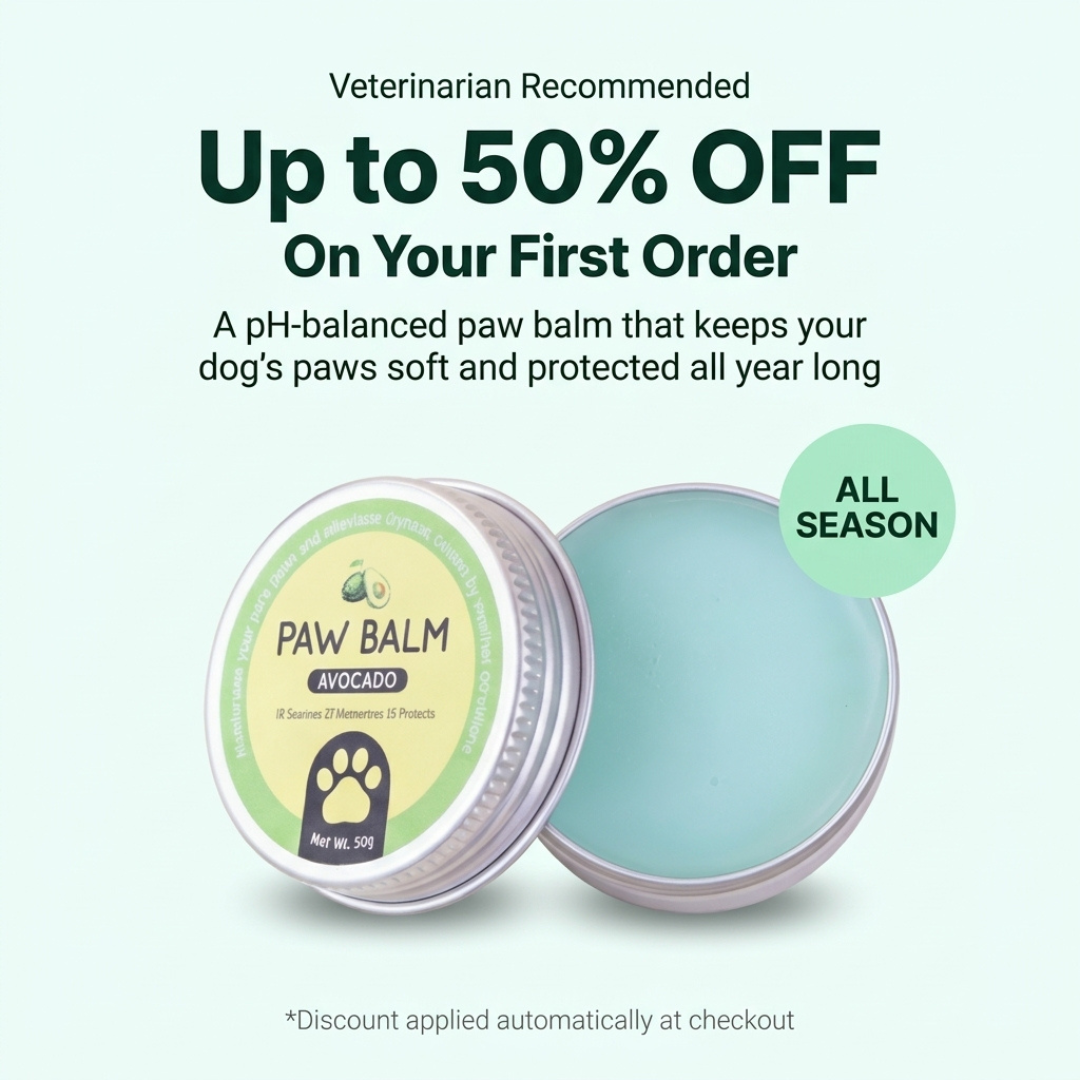
Hi Tricia! For crusty nose (nasal hyperkeratosis), you’ll want our Sea Buckthorn Healing balm. The omega-7 in sea buckthorn oil works at the cellular level to help regulate keratin production, which is what actually addresses the condition (unlike chapstick or Vaseline, which only coat the surface).
Apply twice daily for the first 3 weeks, then once daily for maintenance. Most owners see softening within 3-4 weeks.
Any other questions, just email us at info.seephy@gmail.com happy to help!
—The Seephy Team
I am confused which one to order for the crusty nose…please advise, thank you