Written by Dr. Marcus Chen, DVM | April 28, 2026
A Labrador named Bailey came into my Minneapolis clinic last winter with paw pads so cracked they bled with every step. Her owner had been applying petroleum jelly twice daily for three weeks. "I don't understand," she said. "I'm moisturizing constantly. Why won't it heal?"
Because petroleum jelly doesn't heal tissue, it just coats the surface.
This is the most common mistake I see with cracked paw pads. Owners treat cracks like dry skin when they're actually tissue injuries that require regeneration, not just surface moisturization.
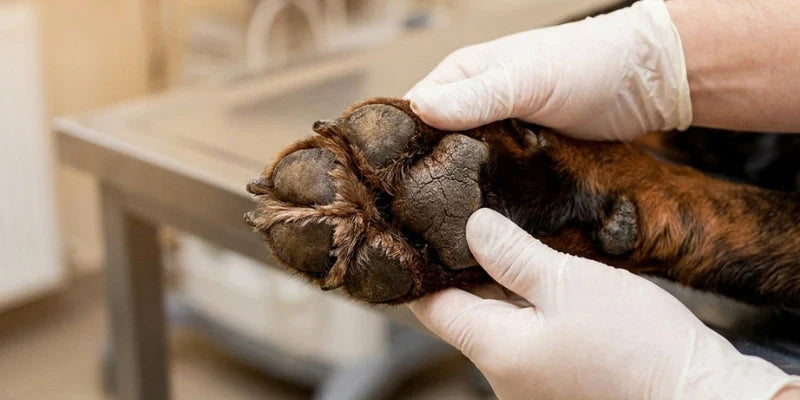
Cracked paw pads are partial-thickness wounds in the keratin layer. The outer protective layer has split or separated, exposing deeper tissue. Sometimes the cracks extend into the dermis (the layer beneath the keratin), causing bleeding and pain.
These wounds don't heal with surface coating, they heal with keratin regeneration. And keratin regeneration requires specific fatty acids that most paw products don't provide.
I've treated hundreds of cracked paw pad cases in eight years of practice. Most heal within 7-14 days when approached correctly. Some take longer if the damage is severe or the underlying cause isn't addressed.
Here's what actually works—and what wastes your time making things worse.
What Actually Causes Paw Pad Cracks
Cracked paw pads aren't random—they're the result of specific stressors that exceed the tissue's ability to repair itself.
In healthy dogs, paw pad keratin continuously regenerates. Old keratin cells migrate outward and shed while new cells form in the basal layer. This turnover maintains flexible, intact pads.
Cracks form when damage outpaces repair. The keratin layer loses moisture faster than it can regenerate, becomes brittle, and splits under mechanical stress.
The five main causes I see in practice:
1. Environmental extremes (most common)
Winter: Cold temperatures, salt exposure, and ice melt chemicals create the perfect storm for cracked pads.
Cold air dehydrates keratin (similar to how your lips crack in winter). Salt and ice melt chemicals chemically damage the protein structure through osmotic stress and pH disruption. The combination creates brittle, inflexible tissue that cracks under normal walking pressure.
I see the highest volume of cracked pad cases January through March in Minneapolis—after months of cumulative salt exposure.
Summer: Hot pavement causes a different problem. Thermal damage creates surface burns that progress to cracks as damaged tissue dries and peels. Dogs who walk on 145°F+ asphalt develop heat-induced cracks that often get misdiagnosed as "just dryness."
2. Excessive washing
This surprises many owners. Over-cleaning actually causes cracks, not prevents them.
Dog paw pads have natural oils (sebum) that maintain moisture balance. Washing with soap strips these oils. The more you wash, the faster the pads dry out.
I had a patient whose owner washed her dog's paws after every walk—3-4 times daily. The pads were chronically cracked despite "constant care." We reduced washing to once daily with plain water and the cracks healed within two weeks.
Daily washing with shampoo or antibacterial soap is excessive for healthy paws. Plain water rinse after muddy or salty walks is sufficient.
3. Abrasive surfaces
Dogs who regularly run on rough concrete, gravel, or rocky trails develop cracks from mechanical wear.
Active working dogs and hiking dogs are particularly vulnerable. The constant friction wears down the outer keratin layer faster than it regenerates, creating thin spots that crack easily.
Bailey—the Labrador from my opening story—was a daily runner on concrete bike paths. The combination of abrasive surface + winter salt created severe bilateral cracking on all four paws.
4. Underlying skin conditions
Allergies are a hidden cause of cracked pads. Dogs with environmental or food allergies often develop chronic inflammation that extends to paw pads.
The inflammatory process disrupts normal keratin formation. The pads become thickened, dry, and prone to cracking. These dogs also lick their paws obsessively, which removes protective oils and delays healing.
Autoimmune conditions like pemphigus can cause severe cracking, though this is relatively rare.
5. Age-related changes
Senior dogs (typically 9+ years) produce less sebum as sebaceous glands decline with age. Their pads dry out more easily and heal more slowly than younger dogs.
I see more cracked pad cases in senior Labs, Golden Retrievers, and German Shepherds—breeds already predisposed to dry skin issues that worsen with age.
Diagnosing severity:
Superficial cracks: Fine lines or splits in the outer keratin layer, no bleeding, minimal pain
Moderate cracks: Deeper fissures that may ooze clear fluid, mild limping
Severe cracks: Deep splits extending into dermis, bleeding, significant pain, refusal to walk
Severity determines healing timeline, superficial cracks heal in 7-10 days, severe cracks need 3-4 weeks.
Why Petroleum Jelly Doesn't Work (And What Makes It Worse)
Petroleum jelly is the most commonly recommended treatment for cracked paws—and it's almost completely ineffective for actual healing.
Here's why:
Petroleum jelly is an occlusive barrier, it sits on the surface and prevents moisture loss. That's it. It doesn't penetrate tissue. It doesn't deliver nutrients. It doesn't stimulate keratin regeneration.
For prevention, occlusive barriers work. If you want to protect healthy pads from salt or cold, petroleum jelly creates a temporary shield.
For healing, occlusive barriers do almost nothing. Cracked pads need regeneration, not just moisture retention.
Think of it this way: if you have a cut on your hand, coating it with petroleum jelly doesn't make it heal faster. It keeps it moist, which is better than letting it dry out completely, but it doesn't accelerate tissue repair.
The same principle applies to cracked paw pads.
Additionally, petroleum jelly has three problems in healing contexts:
Problem 1: It doesn't penetrate
Petroleum jelly molecules are too large to absorb into keratin. It sits on the surface where it gets licked off, walked off, or rubbed off within 30-60 minutes.
If your dog removes it before bedtime, you got maybe 2 hours of surface protection. That's not enough contact time to support healing.
Problem 2: It attracts dirt and debris
Petroleum jelly is sticky. Dirt, dust, and bacteria adhere to the greasy surface. If the crack is deep enough to expose dermis, you've now created a contaminated wound environment.
I've treated infected cracked pads where the owner was diligently applying petroleum jelly, the sticky surface was trapping bacteria against the open tissue.
Problem 3: Dogs lick it obsessively
The thick, greasy texture feels weird to dogs. They lick at it constantly trying to remove the sensation.
Excessive licking delays healing—the moisture from saliva, combined with mechanical friction from the tongue, keeps the crack edges irritated and prevents tissue closure.
Heavy waxes have the same limitations
Products like Musher's Secret use heavy wax blends (beeswax, carnauba wax). These create even thicker barriers than petroleum jelly.
They work well for protection (winter salt, summer heat), but for healing, they suffer the same problems—no penetration, no regenerative nutrients, attracting contamination.
What cracked pads actually need:
Fatty acids that penetrate into damaged keratin and support cellular regeneration—specifically omega-7 fatty acids (palmitoleic acid) that accelerate keratin synthesis and reduce inflammation at the tissue level.
The 3-Phase Healing Protocol
Successful healing requires matching treatment to healing stage. What works in the acute phase doesn't work in the repair phase.
Phase 1: Acute Care (Days 1-3) — Stop Further Damage
Goal: Clean the wound, prevent infection, protect from contamination
Protocol:
Step 1: Clean gently with plain water
Rinse the cracked paw with lukewarm water for 2-3 minutes. No soap unless there's visible dirt or debris—and if you use soap, use a mild, fragrance-free option and rinse thoroughly.
Do NOT use hydrogen peroxide or alcohol—these damage healthy tissue and delay healing.
Step 2: Dry completely
Pat dry with a clean towel, especially between toes. Moisture trapped between toes creates fungal/bacterial growth opportunities.
Step 3: Apply antimicrobial protection (if needed)
For moderate-to-severe cracks with open tissue, apply a thin layer of veterinary-approved antimicrobial ointment (your vet can prescribe).
For superficial cracks, skip this step—over-treating introduces unnecessary chemicals.
Step 4: Apply healing balm
Use a healing-specific formula rich in omega-7 fatty acids. Apply liberally—you want the crack completely filled.
Step 5: Protect during healing
For severe cracks, use a soft bootie indoors to prevent licking and contamination. Remove the bootie for 10-15 minutes every 4-6 hours to let the paw breathe.
For superficial cracks, no bootie needed unless the dog licks obsessively.
Step 6: Restrict activity
No running, hiking, or extended walks during acute phase. Short bathroom breaks on grass only. The crack needs mechanical rest to close.
Repeat twice daily (morning and night) for 3 days.
Phase 2: Active Repair (Days 4-14) — Accelerate Regeneration
Goal: Support keratin regeneration, close the crack, restore tissue integrity
By day 4, if you're treating correctly, the crack should look less angry—less red, less weeping, starting to close at the edges.
If it looks worse on day 4 (more red, more swollen, foul odor), see your vet immediately, it's infected.
Protocol:
Step 1: Continue gentle cleaning
Once daily now (not twice)—over-cleaning delays repair. Rinse with plain water after walks if paws get dirty, otherwise leave them alone.
Step 2: Apply regenerative balm
This is the critical phase for omega-7 fatty acids. Palmitoleic acid (the primary omega-7) directly supports keratin synthesis at the cellular level.
Studies show omega-7 application accelerates epithelial regeneration by 40-60% compared to inactive carriers.
Apply twice daily—once in morning after bathroom break, once at night before bed.
Step 3: Gradually increase activity
Days 4-7: Short leash walks (10-15 minutes) on soft surfaces (grass, dirt trails)
Days 8-14: Moderate walks (20-30 minutes), avoid abrasive surfaces
Monitor the crack daily—if it reopens with activity, you increased too fast. Return to shorter walks for another 3-4 days.
Step 4: Address underlying causes
If winter salt caused the crack: apply protective balm before every walk, rinse with plain water after walks
If summer heat caused it: switch to early morning/late evening walks, test pavement with 7-second hand test
If abrasive surfaces: reduce mileage on concrete/gravel until fully healed
If allergies suspected: discuss with your vet—you may need concurrent allergy management
Most superficial cracks close completely by day 10-14. You'll see pink, new keratin forming where the crack was. It looks slightly different in texture than surrounding pad—that's normal.
Moderate-to-severe cracks need 2-3 weeks in this phase.
Phase 3: Prevention & Strengthening (Day 15+) — Prevent Recurrence
Goal: Build resilient keratin, prevent future cracks
Once the crack is visibly closed, you're not done. New keratin is thinner and more vulnerable than mature keratin, it needs time to strengthen.
Protocol:
Step 1: Daily maintenance balm
Switch from healing-intensive balm to daily maintenance formula. You no longer need maximum omega-7 concentration—you need moisture balance and flexibility.
Apply once daily after evening walk or before bed.
Step 2: Resume full activity gradually
Week 3: Return to normal walk duration
Week 4: Resume running/hiking if applicable
Step 3: Protective application before harsh conditions
Winter: Apply protective balm before every walk in salt/snow conditions
Summer: Apply lightweight summer formula before midday walks on hot pavement
Hiking: Apply before long trails on abrasive surfaces
Step 4: Monitor for early signs
Check paws weekly for dryness, roughness, or fine lines (early crack formation). If you catch these signs early and treat immediately, you prevent full cracks from developing.
Continue daily maintenance indefinitely if your dog is predisposed to cracking (senior dogs, working dogs, chronic dry paws).
What Makes Cracks Worse (Avoid These)
I see owners make these mistakes repeatedly, all of which delay healing or make cracks worse:
Mistake 1: Over-washing
Washing more than once daily removes protective oils and delays healing. Unless the paw is visibly dirty or contaminated, plain water rinse is sufficient.
Mistake 2: Using human lotions
Human skin products often contain fragrances, dyes, and alcohol that irritate dog paw tissue. Some contain ingredients toxic to dogs if licked (cocoa butter from chocolate, essential oils, retinoids).
Use dog-specific formulations only.
Mistake 3: Continuing normal activity too soon
Mechanical stress reopens healing cracks. If your dog is still running, hiking, or playing during the first week of treatment, the crack can't close.
Rest is non-negotiable for the first 3-5 days.
Mistake 4: Inconsistent application
Skipping days breaks the regeneration cycle. Keratin synthesis requires consistent nutrient delivery. Apply twice daily without exception during active repair phase.
Mistake 5: Using expired or rancid products
Fatty acid-based balms oxidize over time (especially if exposed to heat or light). Rancid oils not only smell bad—they can cause contact irritation.
Check expiration dates. Store balms in cool, dark locations. If it smells off, throw it out.
When Cracked Paws Require Veterinary Care
Most superficial and moderate cracks heal at home with proper protocol. But some situations require professional intervention:
See your vet within 24-48 hours if:
Signs of infection:
- Swelling, redness, or heat that worsens after 2-3 days of treatment
- Yellow or green discharge (pus)
- Foul odor from the crack
- Fever or lethargy (systemic infection)
Severe pain or mobility issues:
- Dog refuses to bear weight on affected paw
- Constant licking despite diversion attempts
- Crying or aggression when paw is touched
Non-healing cracks:
- No improvement after 7-10 days of proper treatment
- Crack continues to deepen or widen despite care
- Recurring cracks in the same location after healing
Systemic disease suspected:
- Multiple paws affected simultaneously without obvious environmental cause
- Other skin lesions on body (face, ears, belly)
- Chronic allergies or autoimmune history
Extremely deep cracks:
- Bleeding that doesn't stop with gentle pressure
- Exposed tissue beneath keratin layer visible
- Flap of loose keratin hanging off the pad
Your vet may prescribe:
- Oral antibiotics for infection
- Pain medication for severe cases
- Anti-inflammatory drugs for autoimmune-related cracks
- Allergy management if allergies are underlying cause
- Surgical debridement for severe necrotic tissue (rare)
Bailey's outcome:
The Labrador from my opening story? We treated her severe bilateral cracks with oral antibiotics for secondary infection, pain medication for comfort, and twice-daily omega-7 healing balm application.
Her owner restricted her to leash walks on grass only for two weeks, applied protective balm before every winter walk afterward, and rinsed paws with plain water after salt exposure.
By day 12, the bleeding stopped. By day 18, the cracks closed. By week 4, she was running again—with daily maintenance balm and pre-walk protection to prevent recurrence.
What Actually Heals Cracked Paw Pads
Cracked paw pads heal when you support keratin regeneration, not just surface moisture.
Petroleum jelly and heavy waxes coat the surface, they don't penetrate tissue or deliver regenerative nutrients. They might keep moisture from escaping, but they don't accelerate healing.
Omega-7 fatty acids penetrate damaged keratin and support cellular repair. Palmitoleic acid (the primary omega-7 in sea buckthorn oil) directly stimulates keratin synthesis and reduces inflammation at the tissue level.
The 3-phase protocol works because it matches treatment to healing stage:
Phase 1 (Days 1-3): Stop damage, protect from infection
Phase 2 (Days 4-14): Accelerate regeneration with omega-7 twice daily
Phase 3 (Day 15+): Strengthen new keratin, prevent recurrence
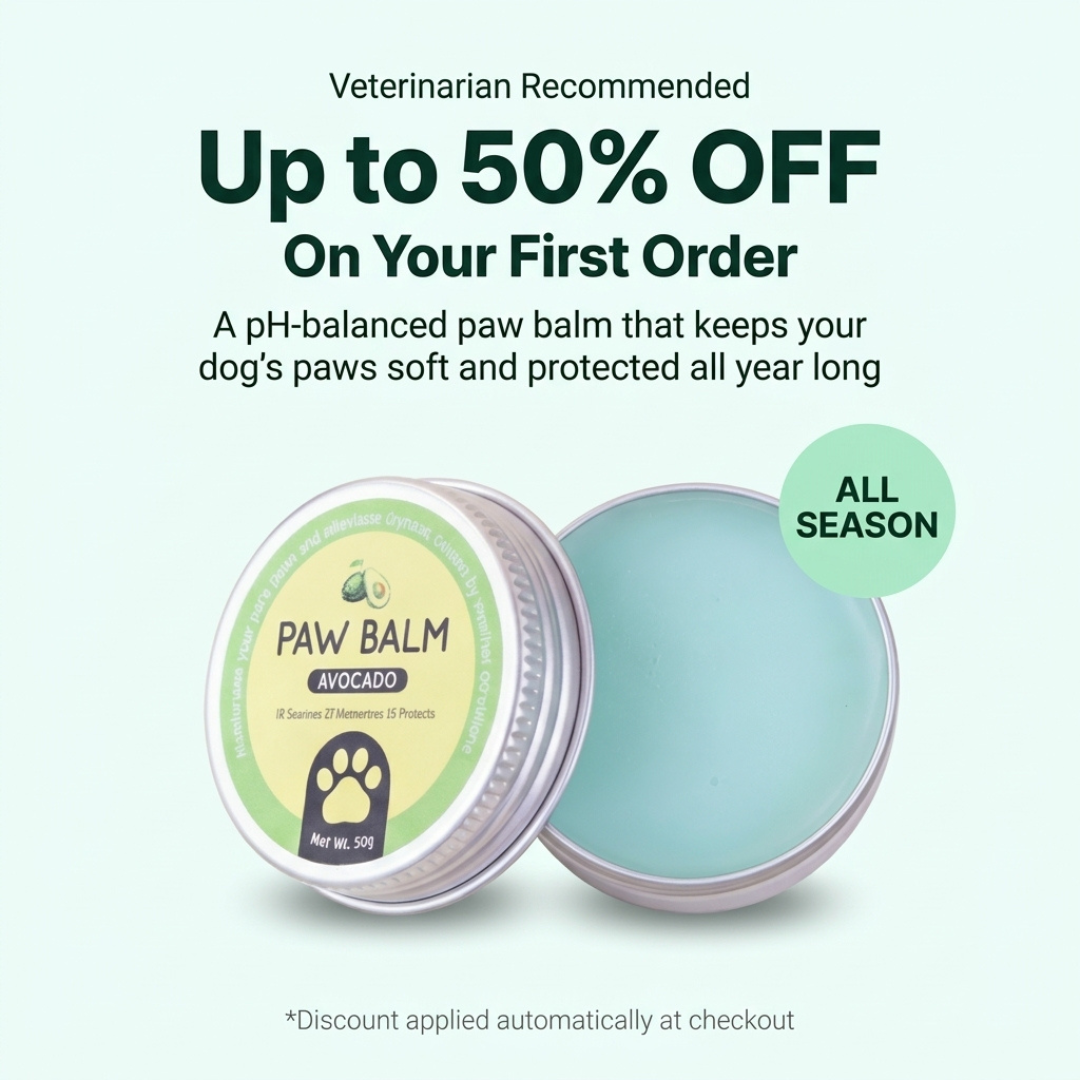
Seephy's Sea Buckthorn Healing Balm delivers concentrated omega-7 (190mg per gram) specifically for tissue repair. Apply liberally to the crack twice daily during active repair, then transition to All-Season Shield for daily maintenance once healed.
Most superficial cracks heal in 7-10 days. Moderate cracks heal in 2-3 weeks. Severe cracks need 3-4 weeks with proper treatment.
If the crack isn't improving by day 7, or if you see signs of infection (swelling, pus, foul odor), see your vet immediately.
Your dog shouldn't have to walk in pain for weeks while you hope petroleum jelly eventually works. Use the protocol that accelerates regeneration and get them back to comfortable walking in days, not months.