Summer Paw Care: Why Your Winter Balm Is Making Things Worse
The most common question we get in late spring: "Can I just use my winter paw balm through summer?"
The short answer: No. And using it might actually make things worse.
Here's why: winter formulas are engineered for cold weather protection, thick, wax-heavy barriers that resist salt, ice, and freezing temperatures. They create occlusive layers that seal moisture in and keep harsh winter elements out.
In summer heat, those same properties become liabilities. The occlusive barrier that protects against salt now traps heat against the paw pad. The thick wax that stays solid in freezing temperatures melts into greasy residue at 90°F. The heavy texture that provides winter insulation makes dogs uncomfortable in heat—so they lick it off within minutes.
You need different formulas for different seasons. Not because of marketing, but because of chemistry.
Here's everything you need to know about summer paw care and why winter balms fail when temperatures rise.
Why Heavy Waxes Don't Work in Summer Heat
Winter paw balms are formulated around one core principle: create a protective barrier that stays solid in extreme cold.
To achieve this, most winter formulas use high concentrations of hard waxes, beeswax, carnauba wax, candelilla wax. These waxes have high melting points (typically 140-180°F) and create thick, occlusive barriers that don't break down in freezing temperatures.
This is exactly what you want in winter:
- The barrier stays intact on frozen sidewalks
- It blocks salt and ice melt chemicals from penetrating paw pads
- It prevents moisture loss in dry, cold air
- It creates insulation against freezing temperatures
In summer, these same properties create three critical problems:
Problem 1: Heat trapping
Occlusive barriers don't just keep things out—they also trap heat in.
When a dog's paw contacts 145°F asphalt, heat begins transferring into the paw pad tissue. A healthy paw pad would dissipate some of that heat through the permeable keratin layer.
But a heavy wax coating creates a sealed layer that prevents heat dissipation. The heat that should escape gets trapped between the wax barrier and the tissue. Instead of protecting against heat, the barrier intensifies thermal exposure.
Think of it like wearing a thick winter coat on a 90°F day. The coat doesn't protect you from heat—it makes you hotter by trapping your body heat and preventing cooling.
Problem 2: Melting point failure
Most winter balms use shea butter as the primary carrier oil because it has excellent moisturizing properties and a melting point of 89-100°F.
In winter, this melting point is perfect—the formula stays semi-solid even when applied to warm paw pads.
In summer, ambient temperatures regularly exceed 90°F. The moment shea butter-based balm hits a paw pad in summer heat, it begins melting.
What happens when the carrier melts:
- The formula loses structural integrity
- It becomes greasy, slippery, and uncomfortable
- Dogs lick it off obsessively (it feels weird to them)
- It transfers to floors, carpets, and furniture
- Protective function is lost within 5-10 minutes
One summer study tracked how long dogs kept winter balm on their paws in 85°F+ weather. Average time before licking it off: 8 minutes. If the dog removes the product before you even start your walk, you have zero protection.
Problem 3: Uncomfortable texture in heat
A thick, waxy coating on paw pads feels heavy and restrictive in summer heat. It's uncomfortable. Dogs naturally want to remove it.
They lick. They rub their paws on carpet. They chew at the pads. Anything to get the heavy feeling off.
Winter balms work in cold weather partly because the thick texture provides cushioning and insulation that feels good in harsh conditions. The dog tolerates the heaviness because it solves a problem (cold, salt irritation).
In summer, there's no cold to insulate against. The thick texture is just uncomfortable weight. The dog perceives no benefit and wants it gone.
If your dog won't keep the product on, it doesn't matter how good the formula is—you get no protection.
The Lightweight Formula Difference: Coco Butter vs Shea Butter
The key to summer paw protection is understanding melting points and absorption rates.
Shea butter (winter formulas):
- Melting point: 89-100°F
- Texture: Thick, creamy, slow-absorbing
- Barrier type: Occlusive (sits on surface)
- Best use: Cold weather, salt protection, moisture retention in dry air
Coco butter (summer formulas):
- Melting point: 75-79°F
- Texture: Light, fast-absorbing, non-greasy
- Barrier type: Penetrating (absorbs into keratin)
- Best use: Hot weather, heat protection, lightweight hydration
Wait, coco butter melts at a LOWER temperature than shea butter. Won't that make it even worse in summer?
This is the counterintuitive part that confuses many owners. Lower melting point is actually an advantage in summer formulas.
Here's why:
You WANT the product to melt on application. When coco butter melts on contact with paw pads (which are typically 100-102°F even before heat exposure), it immediately penetrates into the keratin structure rather than sitting as a surface layer.
Absorption creates the protective effect, not surface coating.
Once absorbed into the keratin matrix, coco butter creates a flexible, breathable layer within the tissue that:
- Reduces thermal conductivity (slows heat transfer from pavement to deeper tissue)
- Maintains moisture balance without trapping heat
- Stays functional even at high temperatures (doesn't break down or become greasy)
- Feels comfortable to the dog (lightweight, not heavy)
Shea butter's higher melting point means it stays semi-solid on the surface longer, which sounds good until you realize that surface coating is what traps heat. The slower absorption is actually a disadvantage in summer.
Molecular size also matters:
Coco butter has smaller fatty acid molecules that penetrate keratin more easily. Shea butter has larger molecules that form surface barriers.
In winter: Large molecules creating surface barriers = good (blocks salt, seals moisture)
In summer: Small molecules penetrating quickly = good (reduces heat transfer without trapping)
Texture experience:
Winter balm on paw in summer: Thick, greasy, melts into slippery coating, dog licks it off within minutes
Summer balm on paw in summer: Absorbs in 2-3 minutes, leaves no greasy residue, dog tolerates it comfortably
This is why seasonal formulas exist, not marketing, but fundamental differences in how fats behave at different temperatures.
Summer-Specific Threats Your Dog's Paws Face
Hot pavement is the primary summer threat, but it's not the only one. Summer paw care requires protection against multiple environmental factors.
Hot asphalt and concrete
We covered this extensively in the hot pavement guide, but the key numbers:
- 77°F air → 125°F asphalt
- 90°F air → 145°F asphalt
- 100°F air → 155°F+ asphalt
Burns occur in 30-60 seconds at these temperatures. Lightweight barrier protection reduces thermal conductivity enough to extend safe exposure time and prevent burns during unavoidable pavement contact (crosswalks, parking lots, driveways).
Beach sand
Many owners assume natural surfaces are safer than pavement. Not true for beach sand.
Sand reaches 130-140°F on a sunny 90°F day, hot enough to cause burns with prolonged contact.
Additionally, sand creates abrasion on wet paw pads. When your dog runs into the ocean and comes back out, their paw pads are hydrated and softened. Walking on hot, coarse sand in this state creates micro-abrasions that compromise the keratin layer.
The combination of heat + abrasion + salt water drying effect makes beach days particularly harsh on paws.
Pool chlorine
Chlorinated pool water has a drying effect on paw pads similar to excessive bathing. The chlorine strips natural oils from the keratin, leaving pads dry and prone to cracking.
If your dog swims in a pool regularly throughout summer, their paw pads need extra moisturization to counteract the drying effect.
UV exposure
Yes, paw pads can get sun damage—though this is relatively rare compared to other summer threats.
The keratin layer provides some natural UV protection, but prolonged exposure to intense sun on light-colored paw pads (especially pink pads on dogs with white fur) can cause UV-related damage similar to sunburn.
This is most common in dogs who spend hours lying on hot pool decks or sunny patios where the surface reflects UV radiation back onto paw pads.
Seasonal allergies and licking
Summer brings increased pollen, grass, and environmental allergens. Dogs with seasonal allergies often lick their paws obsessively to relieve itching.
Excessive licking removes natural oils and any protective balm you've applied. It also introduces moisture that can create interdigital yeast infections (between the toes).
Summer paw care for allergic dogs requires reapplication after licking episodes and potentially addressing the underlying allergy issue.
Beach & Vacation Paw Care: What Most Owners Forget
Summer vacations often involve environments your dog's paws aren't adapted to—beach sand, boat docks, hiking trails, campground gravel.
Pre-vacation preparation:
2 weeks before travel: Start daily application of summer paw balm to build up the protective keratin layer. Well-moisturized, flexible paw pads handle new surfaces better than dry, brittle ones.
Pack paw care essentials: Summer balm, healing balm (for unexpected injuries), and a small towel for post-beach paw rinsing.
Beach day protocol:
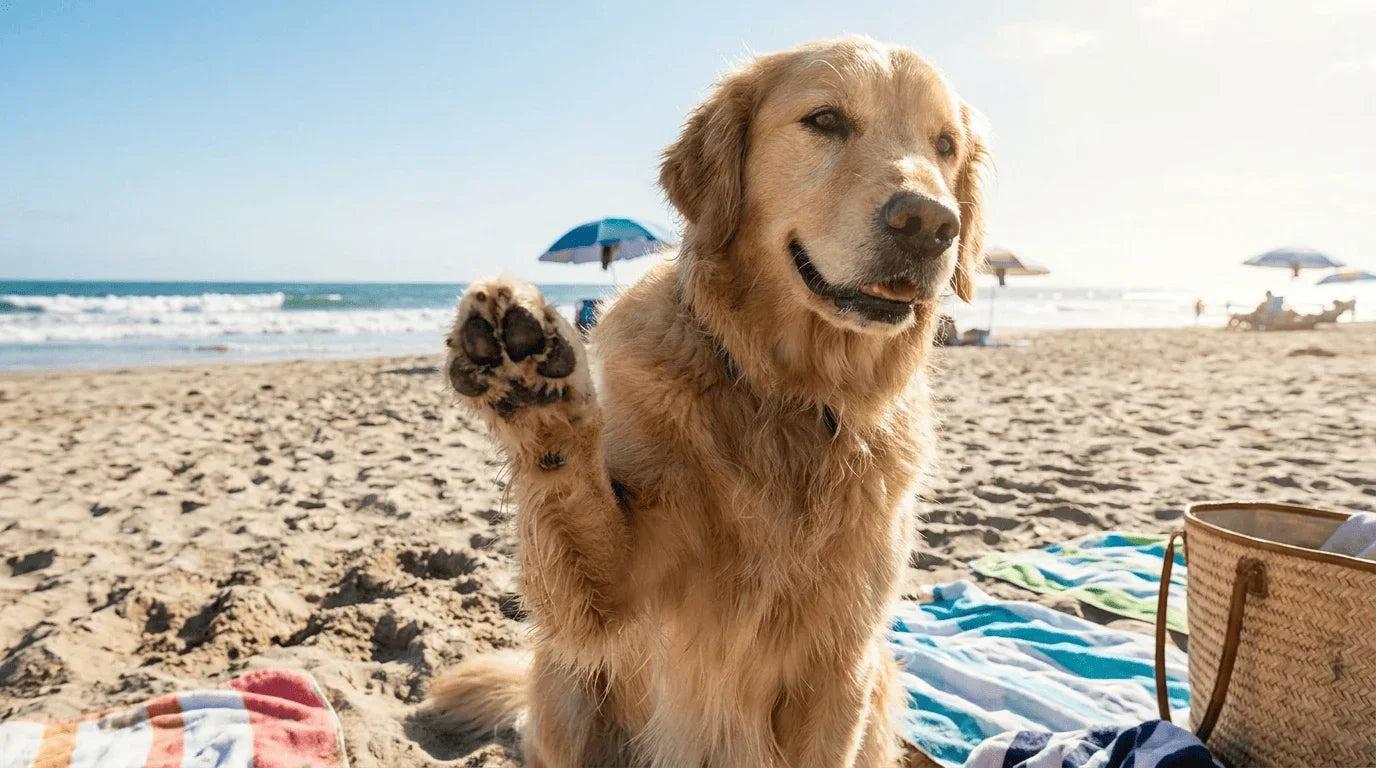
Before beach: Apply lightweight summer balm 10 minutes before arriving. This creates baseline protection against hot sand.
During beach time: Rinse paws with fresh water after each ocean swim to remove salt before it dries and causes irritation. Reapply balm after rinsing.
After beach: Thorough fresh water rinse to remove all sand and salt. Dry paws completely (especially between toes). Apply healing balm if any abrasion or redness is visible.
The "wet paws on hot sand" problem:
This is the mistake that causes most beach-related paw injuries. Your dog runs into the ocean, comes out with soaked, softened paw pads, and immediately runs across 140°F sand.
Wet keratin is more vulnerable to both heat damage and abrasion than dry keratin. The combination creates rapid tissue damage.
Solution: After ocean play, walk your dog on cooler sand near the water's edge where waves have cooled the surface, or carry them across hot sand to a shaded area before allowing them to walk.
Hiking and camping considerations:
Rocky trails create different abrasion patterns than your dog experiences on neighborhood sidewalks. Sharp granite, limestone, or volcanic rock can cause cuts or excessive wear.
Morning hikes are safest—trails are cooler, and you avoid afternoon heat when rock surfaces reach dangerous temperatures.
Nighttime campground gravel can still be hot from absorbed daytime heat. Test gravel temperature before evening bathroom walks—it often stays 20-30°F hotter than air temperature for hours after sunset.
The All-Day Summer Protection Strategy
Summer paw protection isn't "apply once and done" it requires strategic timing based on your dog's activity schedule.
Morning protocol (before first walk):
Apply summer balm 5-10 minutes before the walk. This timing allows absorption into the keratin layer while the formula is still slightly warm from your hands.
Use approximately a kidney bean-sized amount per paw for a 50-pound dog. Work it into the pad surface and between toes.
For early morning walks (pre-7am): Full protection may not be necessary if pavement is still cool, but light application maintains baseline moisture and prevents drying throughout the day.
Midday reapplication:
If your dog goes outside during peak heat (12pm-4pm)—even just for bathroom breaks—reapply before each outdoor exposure.
Short exposures add up. Three 2-minute bathroom breaks on 145°F pavement = 6 minutes of cumulative heat exposure. That's enough for first-degree burns without protection.
Post-swim or post-rain application:
Water exposure (pool, lake, ocean, rain) washes away protective balm and leaves paw pads temporarily softened and vulnerable.
After any water exposure: Dry paws thoroughly and reapply balm.
Evening maintenance:
Apply before the evening walk even if you're walking at 7pm or 8pm when air temperature has cooled. Remember: pavement retains heat for hours after sunset.
After the final walk of the night: Consider a light application of healing balm if you noticed any redness, sensitivity, or excessive heat exposure during the day. This supports overnight keratin repair.
Weekend/vacation intensive schedule:
For beach days, hiking trips, or extended outdoor adventures, follow this intensified protocol:
- Morning: Heavy application before activity
- Every 90 minutes: Reapply during extended activity
- After each water exposure: Rinse, dry, reapply
- Evening: Healing balm for overnight recovery
How to tell if you need reapplication:
Check paw pads for dryness, redness, or heat sensitivity. If pads look dry or feel warmer than normal, reapply.
If your dog starts licking their paws during the day, that's often a sign of discomfort from heat or dryness—reapply immediately.
When to Use Winter vs Summer Formulas
The seasonal transition is not a calendar date—it's based on actual temperature patterns in your region.
General temperature guidelines:
Below 60°F consistently: Winter formula (shea butter-based, heavy barrier)
60-75°F transitional range: Either formula works, or alternate based on daily temps
Above 75°F consistently: Summer formula (coco butter-based, lightweight)
Regional variations:
Southern US (Texas, Arizona, Florida): May need summer formula year-round since temperatures rarely drop below 60°F
Northern US, Canada, UK: Distinct seasons with clear winter (Nov-Mar) and summer (May-Sep) formulas, transitional spring/fall
Australia: Reverse seasons, summer formula Dec-Feb, winter formula Jun-Aug
Coastal regions: More moderate temperatures may allow single formula year-round (mild climate doesn't create extreme hot or cold demands)
Don't wait until the first 90°F day to switch
By the time temperatures hit 90°F consistently, you're already in burn-risk territory. Make the switch to summer formula when daytime highs consistently reach 70-75°F.
This gives you two advantages:
- Your dog's paws adapt gradually to the lighter formula
- You're protected before extreme heat arrives
The "caught between seasons" solution:
If weather is unpredictable—cold morning (50°F), hot afternoon (80°F)—use summer formula before midday walks and optional winter formula for early morning/late evening if pavement is actually cold.
Or simplify: use summer formula during this transition. It still provides adequate protection in mild cold, whereas winter formula actively causes problems in heat.
Why you need BOTH formulas (not just one year-round):
Using winter formula in summer:
- Traps heat, melts into greasy residue, dog licks it off = no protection
Using summer formula in winter:
- Absorbs too quickly in freezing temps, doesn't create sufficient barrier against salt = inadequate protection
Each formula is optimized for its season. Using the wrong one isn't just "less effective"—it can actively make things worse.
The Complete Shield System approach:
Winter Shield (shea butter) for cold weather salt protection
Summer Cool Shield (coco butter) for hot weather heat protection
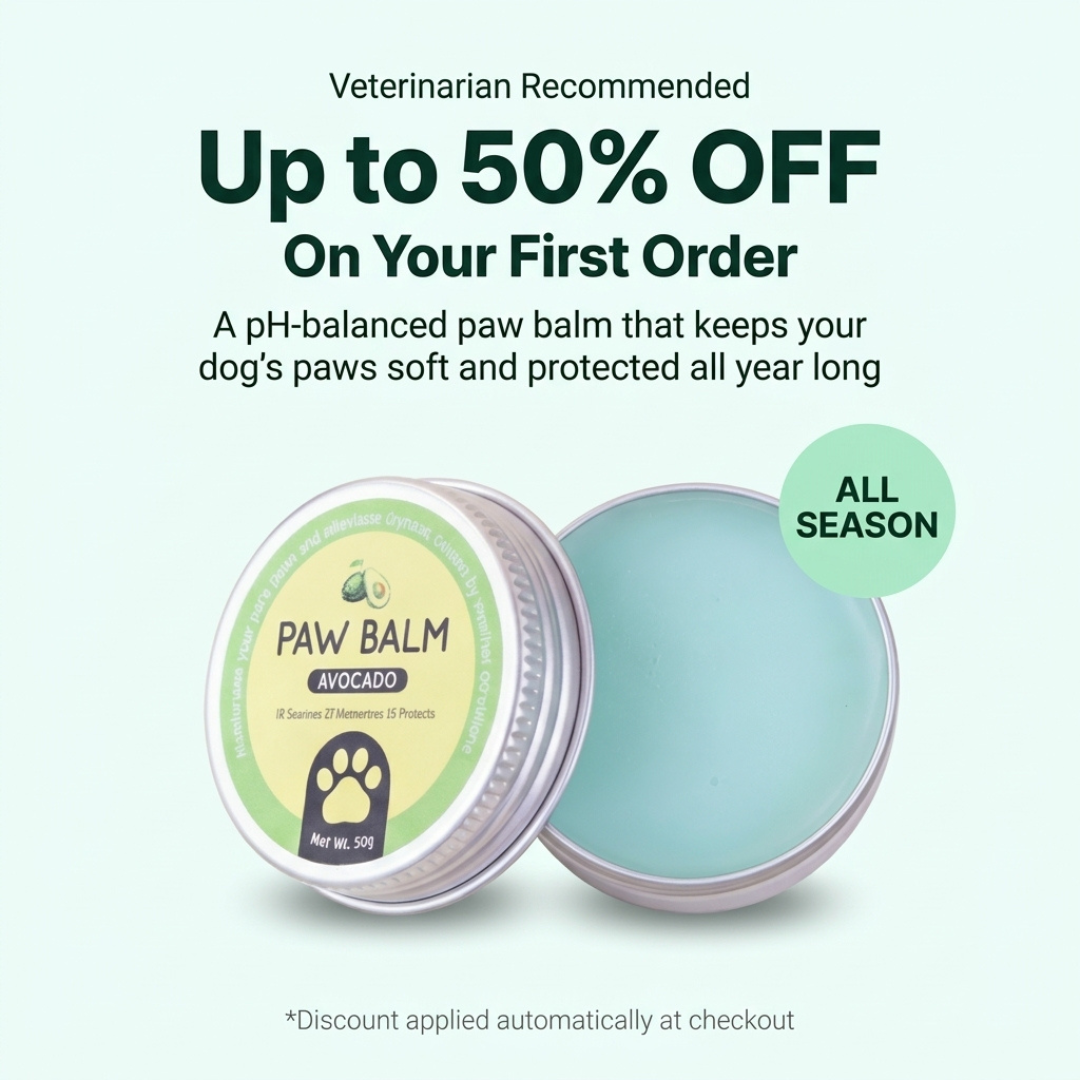
All-Season Shield (avocado butter) for year-round maintenance in mild climates
Sea Buckthorn Healing (omega-7) for injury repair any season
Match the formula to the threat—that's how you get year-round paw health.
Summer Paw Care Done Right
Summer paw protection requires fundamentally different formulas than winter—not heavier versions of the same thing, but chemically distinct solutions for opposite problems.
Winter = barrier against external threats (salt, ice, cold)
Summer = breathable protection against heat transfer (lightweight, fast-absorbing)
Your winter balm is designed to trap and seal—exactly what you don't want when temperatures rise. Heavy waxes trap heat. Shea butter melts into greasy residue. Thick texture makes dogs lick it off.
Summer formulas work because they absorb rather than coat. Coco butter's low melting point is an advantage, not a flaw, it penetrates into keratin immediately, creating flexible protection without surface buildup.
Seephy's Summer Cool Shield uses coco butter specifically because it maintains protection at high temperatures without trapping heat. Apply 5-10 minutes before walks, reapply after water exposure or every 90 minutes during extended outdoor time, and rinse paws after walks.
For beach vacations, hiking trips, or pool days, environments with multiple threats (hot surfaces, sand abrasion, salt water, chlorine) intensify your protocol: pre-activity application, reapplication every 90 minutes, post-activity healing support.
Switch to summer formula when daytime highs consistently reach 70-75°F—don't wait until extreme heat arrives. And switch back to winter formula when temperatures drop below 60°F consistently.
Seasonal adaptation isn't marketing, it's chemistry. Different temperatures require different molecular structures, absorption rates, and barrier types.
Your dog's paws face opposite threats in summer vs winter. The formula should match the season, not run year-round by default.