Why Road Salt Burns Dog Paws (And What Actually Protects Them)
I practice veterinary medicine in Chicago, and every winter I see the same pattern: dogs limping through the door with raw, bleeding paw pads. The owners are confused—"We only walked for 20 minutes," they tell me. "The sidewalk wasn't even that cold."
Here's what they don't realize: the temperature isn't the problem. The road salt is.
Last February, I examined 47 dogs with paw pad injuries in a single week. Forty-three of those cases had one thing in common: chemical burns from deicing salts. Not frostbite. Not cuts from ice. Chemical burns from sodium chloride, calcium chloride, and magnesium chloride—the three most common road salts used across snow-belt states.
The damage I see isn't superficial. Road salt doesn't just irritate dog paws—it actively destroys the protective keratin layer through a process called osmotic damage. And most dog owners have no idea it's happening until their dog refuses to walk.
The Chemistry Behind Salt Burns on Dog Paws
Road salt works by lowering the freezing point of water. That's basic chemistry. But here's what happens when that same salt comes in contact with your dog's paw pads: it creates an osmotic imbalance that pulls moisture directly out of the cells.
Think of it this way: your dog's paw pads have a natural moisture content that keeps the keratin layer flexible and intact. When you introduce a hypertonic solution—like concentrated road salt—onto that surface, the salt molecules pull water out of the paw pad cells through osmosis.
The result? Dehydrated, cracked, and chemically burned tissue.
But it gets worse. Most municipalities don't use pure sodium chloride anymore. They use calcium chloride and magnesium chloride because they work at lower temperatures. These compounds are significantly more hygroscopic than table salt, meaning they pull moisture even more aggressively.
Calcium chloride can cause burns at concentrations as low as 10%. On a typical Chicago sidewalk in January, concentrations hit 25-30%. That's why a 20-minute walk can cause visible damage.
Here's the mechanism:
- Osmotic dehydration pulls water from paw pad cells
- Cell membrane integrity breaks down from dehydration
- pH imbalance occurs (most road salts are alkaline, dog paw pads are slightly acidic at pH 6.2-7.4)
- Inflammation cascade triggers as the body tries to repair damage
- Secondary bacterial infection enters through compromised skin barrier
The visible symptoms—redness, cracking, bleeding, limping—are actually stage 3-4 damage. By the time you notice your dog licking their paws obsessively, the osmotic damage has been happening for hours or even days.
Why Standard "Solutions" Don't Actually Work
Every winter, desperate dog owners try the same three approaches. I see them fail repeatedly.
Dog boots are the most common suggestion. In theory, they create a physical barrier between paw and salt. In practice, 80% of dogs refuse to wear them consistently. The ones who tolerate boots often get snow and ice packed inside, which then melts against the paw pad—trapping salt residue against the skin for extended periods. That's worse than no protection at all.
I had a patient last year—a Golden Retriever named Max—whose owner swore by boots. Max wore them religiously. But the owner didn't realize that salt residue on the boot exterior was transferring to Max's legs and underbelly when he scratched. The chemical burns showed up on his inner thighs, not his paws.
Petroleum jelly is the second-most-common DIY attempt. The logic seems sound: create a moisture barrier. But petroleum jelly has a melting point around 37-65°C (98-149°F). Your dog's paw pad surface temperature in winter drops to 10-15°C (50-59°F). At those temperatures, petroleum jelly solidifies and stops functioning as a barrier.
Even if it stayed liquid, petroleum jelly is occlusive but not protective. It doesn't neutralize the osmotic pull of salt. It just sits on top of the paw pad—and then the dog licks it off within minutes because it tastes like nothing and provides zero benefit.
"Just wipe their paws when you get home" is the third common advice. This helps remove salt residue, yes. But it does nothing for the osmotic damage that already occurred during the walk. Think of it like sunscreen: you don't apply it after you get sunburned. You apply it before sun exposure.
By the time you're wiping paws at home, the calcium chloride has already pulled moisture from the keratin layer for 20-40 minutes. The damage is done.
What Actually Creates a Salt-Resistant Barrier
Here's what works, and why.
You need a barrier that stays functional at low temperatures and actively resists osmotic pull. That means two things: proper melting point and molecular structure that doesn't allow salt penetration.
Shea butter—specifically, pure, unrefined shea butter with a melting point of 32-38°C (89-100°F)—creates a protective wax barrier that remains pliable in winter temperatures. Unlike petroleum jelly, it doesn't solidify in the cold. Unlike oil-based products, it doesn't wash away with the first patch of snow.
But melting point alone isn't enough. You also need pH buffering.
Dog paw pads sit naturally around pH 6.5-7.2. Most road salts push that toward alkaline (pH 8-10). That pH shift accelerates the breakdown of the keratin protective layer. A properly formulated paw balm needs to maintain that neutral-to-slightly-acidic pH even when exposed to alkaline salt compounds.
This is why ingredient selection matters. Shea butter naturally contains triterpenes and cinnamic acid esters that provide mild buffering capacity. When combined with vitamin E (tocopherol), you get both oxidative protection and pH stability.
The application matters too. You need to apply the barrier before the walk, not after. This is counterintuitive for most dog owners, who think of paw balm as a healing treatment. But in winter, the primary function is prevention through barrier protection.
I tell clients: think of it like waterproof boots for humans. You don't put them on after you've already walked through the puddle.
One more critical detail: the barrier needs to be hydrophobic enough to resist snow melt, but not so occlusive that it traps moisture against the skin. That balance is why wax-butter blends work better than pure waxes or pure oils.
How to Apply Winter Paw Protection Correctly
Most people get this wrong. They apply too little, or they apply it like lotion. Here's the protocol I give clients:
1. Apply to clean, dry paws (if your dog just came in from outside, wait 15 minutes for paws to reach room temperature)
2. Use enough product—you want a visible layer on each pad. Not dripping, but definitely more than a thin film. About the size of a kidney bean per paw for a 50-pound dog.
3. Work it into the pad surface AND between the toes. Salt residue builds up between toe webbing. That's where I see some of the worst burns.
4. Let it absorb for 3-5 minutes before going outside. If your dog immediately runs to the door, the balm hasn't had time to bond with the keratin layer. It'll just transfer to your floor.
5. Reapply after walks longer than 30 minutes, or if your dog walks through visible salt concentrations (like parking lot entrances where salt is heavily applied).
For severe winter climates (Minneapolis, Buffalo, anywhere with sustained below-freezing temperatures), apply morning and night. Morning application handles the day walk, night application gives the paw pads overnight healing time with protection in place.
If your dog's paws are already damaged—cracked, bleeding, or visibly raw—you need a healing formula first, not a protective barrier. Look for ingredients like sea buckthorn oil (high in omega-7 fatty acids) that promote rapid cell regeneration. Apply that for 3-5 days until the cracks heal, THEN switch to the protective winter formula for walks.
The Protection Your Dog Actually Needs This Winter
Road salt burns don't heal on their own. Left untreated, osmotic damage compounds each day—more cracks, deeper fissures, eventually secondary infections that require antibiotics.
Prevention is straightforward: apply a pH-buffering, cold-temperature-stable barrier before exposure. That means before every walk, not after.
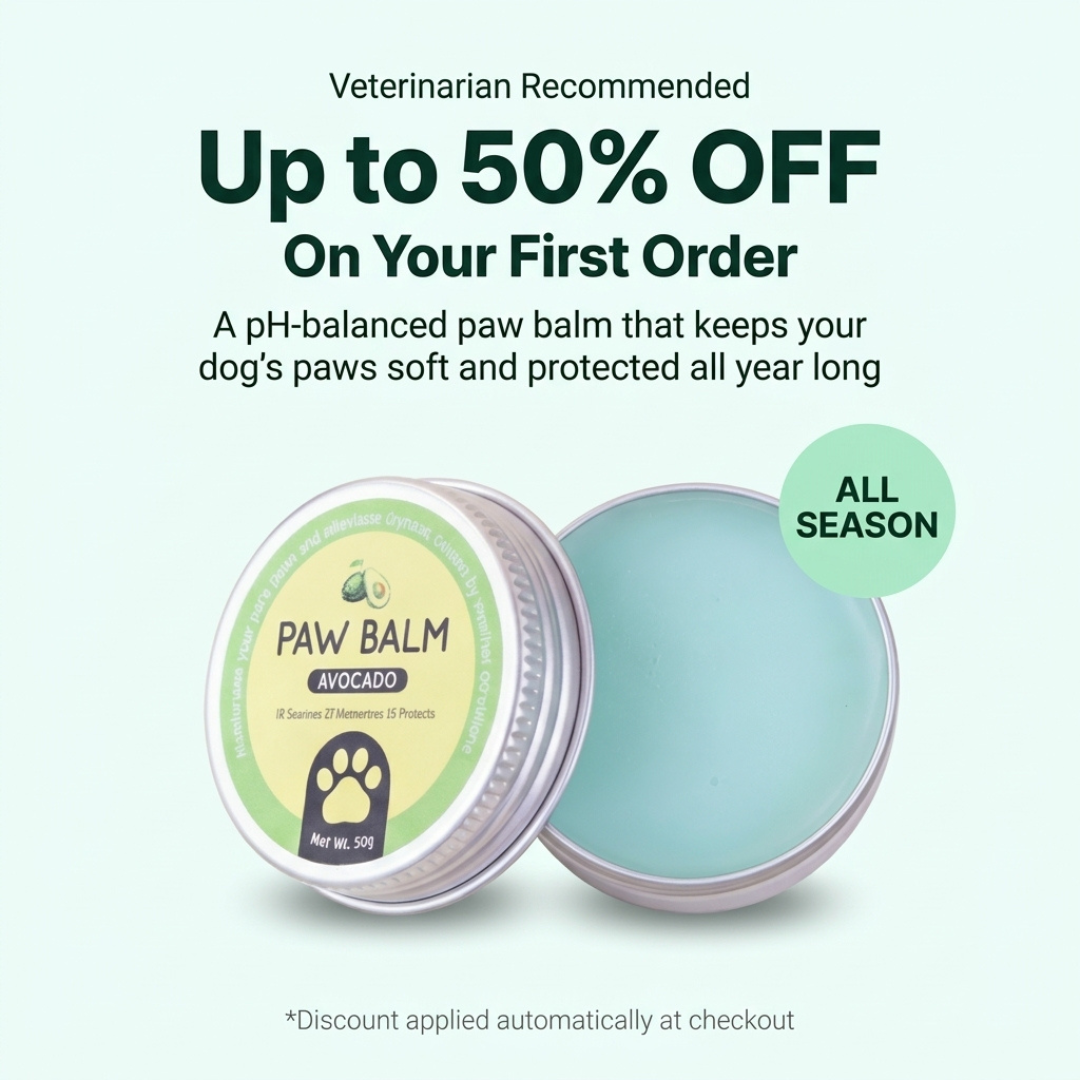
Seephy's Winter Shield uses shea butter as the carrier specifically because it maintains barrier function at temperatures down to 0°C (32°F)—which is exactly where road salt is most heavily applied. The formulation includes vitamin E for oxidative protection and pH maintenance, creating a dual-action barrier against both osmotic damage and alkaline pH shift.
If your dog's paws are already showing damage—redness, limping, obsessive licking—you need healing intervention first. Seephy's Sea Buckthorn formula delivers omega-7 fatty acids that accelerate keratin repair. Use it until the cracks close (typically 3-5 days), then switch to Winter Shield for ongoing protection.
Every winter walk without protection is another day of damage. Your dog won't tell you it hurts until the burns are severe. By then, you're looking at weeks of healing time.
You can prevent all of it with 30 seconds of application before you clip the leash.
Why Your Dog Deserves Better Than "Just Wipe Their Paws"
I see too many dogs suffer through winter because their owners didn't know road salt causes chemical burns, not just irritation. The limping, the licking, the refusal to go outside—those aren't behavioral issues. That's pain.
Your dog trusts you to protect them. They don't understand why their paws hurt after walks. They just know that sidewalks = pain, and eventually they'll refuse to walk at all.
Barrier protection works. I've seen it resolve limping in 48 hours. I've watched dogs who refused winter walks return to normal activity within a week of consistent application.
The chemistry is simple: keep salt away from skin, maintain pH balance, preserve moisture. The execution is even simpler: apply before walks, reapply as needed.
Your dog shouldn't have to suffer through winter. Protect their paws the same way you protect your own skin—before exposure, not after damage.